
Ever see the old movie Car Wash? Did my asking that make that Rose Royce song go through your head? For a couple hours? Sorry about that.
I thought of it today when I read a story from the 3/26/07 issue of the Cincinnati Enquirer, "Bloody mess no crime scene."
It tells about the custodian at the Mr. Spotless Car Wash finding a big bunch of blood and bloodstained material near the vacuums. Understandably, he or she called the police.
Turns out a woman drove a friend (who had been injured in a fight) to the hospital, and after driving someone else around, decided to stop by the car wash and clean the blood out her car. I am curious to know how this was figured out, but the article doesn't give details.
The song says "you never know who you'll meet working at the car wash." Apparently you never know what you'll meet, either. Be careful out there!
Monday, March 26, 2007


Friday, March 23, 2007
More About the Tommy Bowman Case
Kenneth Todd Ruiz of the Pasadena Star News wrote several stories that appeared in local papers this week about the new progress in the investigation of Tommy Bowman's disappearance, the case I talked about in a post here yesterday.
"Caltrans documents may lead to bodies" tells of new efforts to search CalTrans archives for information about freeway construction sites where convicted child killer Mack Ray Edwards worked. He was known to bury victims near those freeways. If you click on that link, also take time to watch "Disappearance of Tommy Bowman," a video interview with Weston DeWalt.
Another story,"Author sought closure for family of missing RB boy " gives more background on DeWalt's investigation, which has resulted in new leads in the case. (RB is an abbreviation for Redondo Beach, California, where Tommy's family lived at the time of his disappearance.)
Today, the 50th anniversary of Tommy's disappearance, a story about Tommy's father and family, "After 50 years, father still mourns," was published.
"Caltrans documents may lead to bodies" tells of new efforts to search CalTrans archives for information about freeway construction sites where convicted child killer Mack Ray Edwards worked. He was known to bury victims near those freeways. If you click on that link, also take time to watch "Disappearance of Tommy Bowman," a video interview with Weston DeWalt.
Another story,"Author sought closure for family of missing RB boy " gives more background on DeWalt's investigation, which has resulted in new leads in the case. (RB is an abbreviation for Redondo Beach, California, where Tommy's family lived at the time of his disappearance.)
Today, the 50th anniversary of Tommy's disappearance, a story about Tommy's father and family, "After 50 years, father still mourns," was published.
Thursday, March 22, 2007
Half a century later, a cold case may be solved
This story, which I first saw in the Los Angeles Times, is remarkable in a number of ways. It's the chilling cold case story of Mack Ray Edwards, a man who confessed in 1970 to molesting and killing six children in the Los Angeles area. A man who, before hanging himself in his prison cell two years later, said the number of children he molested and murdered was actually eighteen. The 1957 disappearance of a child who may be one of those eighteen -- and cases of several other possible victims -- are receiving new attention.
Also remarkable is how the new attention came about. Weston DeWalt -- perhaps you know him as the co-author of The Climb or from his Salon debate with Jon Krakauer -- is a Pasadena writer who has been researching the disappearance of Tommy Bowman, an 8-year-old boy. Bowman disappeared fifty years ago, during a family outing in Arroyo Seco. DeWalt came across an old newspaper photograph of Edwards under arrest. DeWalt felt he had seen Edwards's face before -- and remembered a sketch in the Pasadena Police Department files on Bowman's case. Later, he uncovered other evidence that points to the possibility that Bowman was murdered by Edwards.
I'll let you follow the link to see more about this, but although you may be drawn to the other aspects of the story, I hope it will also give you a sense of how great and unending an impact a missing person case can have on a family.
As those of you who've read my books or who visit here regularly know, I believe one of the areas where we severely underutilize the promise of forensic science and other investigative processes is in missing persons cases. We don't put enough funding or effort into getting DNA samples loaded into national databases, in helping medical examiners offices to make better use of the Web for John and Jane Doe cases, for staffing of investigative units, or other relatively straightforward steps help solve these cases.
According to the FBI, as of Janurary, 2007, there are nearly 51,000 active cases of missing adults in U.S. -- and 6,218 active cases of unidentified persons. Yet the nonprofit National Center for Missing Adults is severely short of funds. If you do nothing else today, please stop by their site and donate a buck or two or whatever you can afford.
The National Center for Missing and Exploited Children reports on the numbers for children, based on two studies by the Department of Justice:
Also remarkable is how the new attention came about. Weston DeWalt -- perhaps you know him as the co-author of The Climb or from his Salon debate with Jon Krakauer -- is a Pasadena writer who has been researching the disappearance of Tommy Bowman, an 8-year-old boy. Bowman disappeared fifty years ago, during a family outing in Arroyo Seco. DeWalt came across an old newspaper photograph of Edwards under arrest. DeWalt felt he had seen Edwards's face before -- and remembered a sketch in the Pasadena Police Department files on Bowman's case. Later, he uncovered other evidence that points to the possibility that Bowman was murdered by Edwards.
I'll let you follow the link to see more about this, but although you may be drawn to the other aspects of the story, I hope it will also give you a sense of how great and unending an impact a missing person case can have on a family.
As those of you who've read my books or who visit here regularly know, I believe one of the areas where we severely underutilize the promise of forensic science and other investigative processes is in missing persons cases. We don't put enough funding or effort into getting DNA samples loaded into national databases, in helping medical examiners offices to make better use of the Web for John and Jane Doe cases, for staffing of investigative units, or other relatively straightforward steps help solve these cases.
According to the FBI, as of Janurary, 2007, there are nearly 51,000 active cases of missing adults in U.S. -- and 6,218 active cases of unidentified persons. Yet the nonprofit National Center for Missing Adults is severely short of funds. If you do nothing else today, please stop by their site and donate a buck or two or whatever you can afford.
The National Center for Missing and Exploited Children reports on the numbers for children, based on two studies by the Department of Justice:
To date, two such studies have been completed. The first, entitled National Incidence Studies of Missing, Abducted, Runaway, and Thrownaway Children (NISMART-1), was released in 1990; the second, known as NISMART-2, wasThink of missing a loved one for years at a time, without knowing what has become of him or her, and you will just begin to imagine what a hell hundreds of thousands of people in the US alone are living through. Here's hoping investigators in LA County are able to end that hell for a few families.
released in October 2002. According to NISMART-2, an estimated
• 797,500 children (younger than 18) were reported missing in a one-year period, resulting in an average of 2,185 children reported missing each day;
• 203,900 children were abducted by family members;
• 8,200 children were abducted by persons outside the family; and
• 115 children were the victims of “stereotypical” kidnapping. These crimes involve someone the child does not know, or knows only slightly, who holds the child overnight, transports the child 50 miles or more, kills the child, demands ransom, or intends to keep the child permanently.
Monday, March 19, 2007
Feeling better
Thanks to those of you who contacted me here and off-list. I'm feeling much better.
I'm not usually one who talks a whole lot about minor illnesses, having too many friends who've battled major ones to feel that a case of the flu is much to talk about. But I realize that some people make an art form of it, and I've been reflecting on some of the styles of reporting minor illnesses I've observed among friends and others over the years.
The Historian
This is the person who answers your question, "How have you been?", with a recital that starts with "Well, two weeks ago, I think it was Tuesday, I felt a little tickle in my throat. And then on Wednesday, I sneezed three times...." He or she will continue in this vein, building symptoms, recovery, and relapse into a saga worthy of a six-hour mini-series, and it will seem to you that you've already been on the phone about that long.
The Effluence Detailers
These folks feel compelled to describe in great detail the appearance anything that came out of any orifice during the course of their illness. The people who inspired others to coin the phrase "too much information."
The Child Effluence Detailers
These are parents who forget that with the possible exception of a child's grandmothers and one or two mothers at the day care center, absolutely no one wants to hear about the frequency with which things that were in the child ended up on the outside of the child, nor do they want to know about the quantity, color, or rate of acceleration of such effluence. If you think you might be tempted to use this phrase:
do not tell the story.
This goes double for pet owners.
The Hypochondriacal Reviewers
These are the people who tell you about all the pangs of anxiety they experienced while contemplating the horrible diseases their flu symptoms might have represented. It doesn't matter that they have known for days that it was the flu -- that's really not the point. No, it's a journey of one freakish self-diagnosis after another. "And then I was really worried, because you know, a fever of 100 degrees is a symptom of [name any deadly disease]." They will congratulate themselves on narrowly escaping a fate that was not within a thousand miles of real likelihood.
I am sure there are others....
I'm not usually one who talks a whole lot about minor illnesses, having too many friends who've battled major ones to feel that a case of the flu is much to talk about. But I realize that some people make an art form of it, and I've been reflecting on some of the styles of reporting minor illnesses I've observed among friends and others over the years.
The Historian
This is the person who answers your question, "How have you been?", with a recital that starts with "Well, two weeks ago, I think it was Tuesday, I felt a little tickle in my throat. And then on Wednesday, I sneezed three times...." He or she will continue in this vein, building symptoms, recovery, and relapse into a saga worthy of a six-hour mini-series, and it will seem to you that you've already been on the phone about that long.
The Effluence Detailers
These folks feel compelled to describe in great detail the appearance anything that came out of any orifice during the course of their illness. The people who inspired others to coin the phrase "too much information."
The Child Effluence Detailers
These are parents who forget that with the possible exception of a child's grandmothers and one or two mothers at the day care center, absolutely no one wants to hear about the frequency with which things that were in the child ended up on the outside of the child, nor do they want to know about the quantity, color, or rate of acceleration of such effluence. If you think you might be tempted to use this phrase:
It was like something out of The Exorcist...
do not tell the story.
This goes double for pet owners.
The Hypochondriacal Reviewers
These are the people who tell you about all the pangs of anxiety they experienced while contemplating the horrible diseases their flu symptoms might have represented. It doesn't matter that they have known for days that it was the flu -- that's really not the point. No, it's a journey of one freakish self-diagnosis after another. "And then I was really worried, because you know, a fever of 100 degrees is a symptom of [name any deadly disease]." They will congratulate themselves on narrowly escaping a fate that was not within a thousand miles of real likelihood.
I am sure there are others....
Sunday, March 18, 2007
The Hurricane Damaged Libraries
...still need your help. But don't send them books.
Really.
Libraries have to build collections carefully, so imagine what happens if they get nothing but truckloads of old bestsellers, worn paperbacks, and outdated science textbooks. (You wouldn't do that, I'm sure, but the rest of the country isn't always as smart as you are.) Besides, they need to repair buildings and replace shelves, and things like that. So how can you help?
You can read about ways to help the recovery efforts of the New Orleans Public Library here.
You can even order a T-Shirt that will help raise money for the library!
The State Library of Louisiana site asks that people please stop sending books, however financial help for Louisiana's other libraries affected by Katrina and Rita is still needed.
Checks may be made out to:
Louisiana Library Foundation
PO Box 2583
Baton Rouge, LA 70821
For libraries in Mississippi, Friends of Mississippi Libraries, working with the Library Commission and MLA, has established a fund for donations to rebuild those MS libraries severely damaged or destroyed by Hurricane Katrina. Tax-deductible donations can be made by sending your contributions to:
Rebuild Mississippi Libraries Fund
c/o AmSouth Bank
210 E. Capitol Street
Jackson, MS 39201
Thanks in advance for your generosity!
Really.
Libraries have to build collections carefully, so imagine what happens if they get nothing but truckloads of old bestsellers, worn paperbacks, and outdated science textbooks. (You wouldn't do that, I'm sure, but the rest of the country isn't always as smart as you are.) Besides, they need to repair buildings and replace shelves, and things like that. So how can you help?
You can read about ways to help the recovery efforts of the New Orleans Public Library here.
You can even order a T-Shirt that will help raise money for the library!
The State Library of Louisiana site asks that people please stop sending books, however financial help for Louisiana's other libraries affected by Katrina and Rita is still needed.
Checks may be made out to:
Louisiana Library Foundation
PO Box 2583
Baton Rouge, LA 70821
For libraries in Mississippi, Friends of Mississippi Libraries, working with the Library Commission and MLA, has established a fund for donations to rebuild those MS libraries severely damaged or destroyed by Hurricane Katrina. Tax-deductible donations can be made by sending your contributions to:
Rebuild Mississippi Libraries Fund
c/o AmSouth Bank
210 E. Capitol Street
Jackson, MS 39201
Thanks in advance for your generosity!
Tuesday, March 13, 2007
FOMA Flu
That's the politest of my several proposed names for the virus that currently has me Flat On My Ass.
I'll spare you the ugly particulars...the only thing worse than having the flu is listening to someone describe their symptoms in whining detail.
I'll spare you the ugly particulars...the only thing worse than having the flu is listening to someone describe their symptoms in whining detail.
Saturday, March 10, 2007
It's Not Just for St. Patrick's Day Any More
If you live in or visit the San Diego area, and want to find some great Irish food, I highly recommend Thornton's Irish Pub & Chop House in El Cajon, California. I was there a few days ago, celebrating my sister Tonya's birthday.
Any gathering of people in my family supplies fine company -- you're on your own for that, sorry I can't help you there. But if you happen to be in the area, I can recommend that you stop by Thornton's. The friendliness of the place, the attentive service, and excellent food make this one worthy of a visit.
Any gathering of people in my family supplies fine company -- you're on your own for that, sorry I can't help you there. But if you happen to be in the area, I can recommend that you stop by Thornton's. The friendliness of the place, the attentive service, and excellent food make this one worthy of a visit.
Wednesday, March 07, 2007
My least favorite day of the year approaches
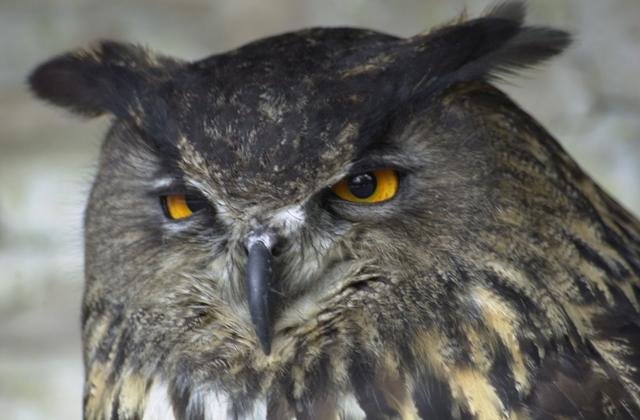
It's a sin to go to bed on the same day you get up.
~Jimmy Walker, Mayor of New York City in the 1920s
~Jimmy Walker, Mayor of New York City in the 1920s
Although I've long known the quotation in a slightly different form, I've finally found out who said it. By 1920, Daylight Saving Time had only been around for a couple of years, and I wouldn't be surprised if it led to Mr. Walker's proclamation.
If you think it's a bit much to label the "early to bed" behavior a sin, I can only tell you that you must try walking around in the night owls' shoes to realize how amusing it is to see the tables turned.
Night owls are constantly labeled as lazy, just because they don't adhere to the "larks'" schedule. Most night owls try not to disturb the larks' sleep, while forced to try to sleep through the larks' extreme daytime noisiness. Over the years I've heard my lifelong circadian rhythms labeled a "sleep disorder," been told that only people who are up to no good are up at night, had larks who spend far more hours lying about than I do tell me that I'm a slug-a-bed if I don't want to answer the phone at nine in the morning. We night owls are often forced to live with the larks' business hours, or were until the Internet freed a lot of us with its 24/7 convenience.
Some of you who have been in Sisters in Crime for a long time may remember my "Night Owl Manifesto." As I said then, I loathe "spring forward" and love "fall back." So you can imagine how unhappy I am that this year, Daylight Saving Time arrives here in the U.S. a month earlier than usual, on March 11 at 2 AM. Since I'll probably be up when it suddenly becomes 3 AM, it may not be as disorienting for me as for some. But there goes an hour of the lovely night.
I found an interesting discussion and history of Daylight Saving Time on the "Web Exhibits" site. Made me realize how much we take standardized time itself for granted. For many years, the time was whatever the locals agreed it was. (Makes one wonder about those time machines in futuristic fiction that can take a person back to "4:15:01 PM on January 10, 1608." I'll save the calendar discussion for another day.) As the site mentions, "Britain was the the first country to set the time throughout a region to one standard time," and most of the country was on GMT by 1855, although the law establishing it throughout the country didn't pass until 1880.
This desire to standardize time was in response to the demands of the railroads, who also exerted pressure in the U.S., although the first person to try to make a push for it in the U.S. was an amateur astronomer and correspondent of Thomas Jefferson, William Lambert, who brought the idea before Congress in 1809. (I suspect many amateur astromers are night owls, too.) According to the Web Exhibits site:
Standard time in time zones was instituted in the U.S. and Canada by the railroads on November 18, 1883. Prior to that, time of day was a local matter, and most cities and towns used some form of local solar time, maintained by a well-known clock (on a church steeple, for example, or in a jeweler's window). The new standard time system was not immediately embraced by all, however.Apparently, Daylight Saving Time was an idea of Ben Franklin's that took a couple of centuries to take root. Too soon for my tastes.
All of this probably falls under the category of "more than you really wanted to know," and if so, just take this as a reminder for those of you in the U.S. to set your clocks forward and check the batteries in your smoke detectors this weekend.
For my fellow night owls, let's just keep to ourselves all the finer aspects of the long, quiet hours of the night and of greeting dawn at the end of one's day.
Maybe old Ben meant something entirely different by "early to bed."
The lovely photo of the owl, above, is used courtesy of Bob Wragg, who kindly made it available on Morguefile.com.
Another fun addiction
A friend sent me a link to this site, which will tell you how popular your name or your friends' names were in the U.S. during the last 100 years, provided the name was in the top 1000 names during a given decade. The stats are derived from Social Security records.
Tuesday, March 06, 2007
Calling all Californians
Please take a minute to go over to the CLP Forum and read the post "AB 1079 - A New Crime Lab Bill in California" and then take another minute to use the links on that post to contact your Assembly member in the California legislature.
It's important! Assessing the forensic science needs of the state is the first step in making sound plans.
Feel free to forward this message to every Californian you know.
It's important! Assessing the forensic science needs of the state is the first step in making sound plans.
Feel free to forward this message to every Californian you know.
Friday, March 02, 2007
My fascination with the CMOS Q&A
I've asked myself why I like reading the Chicago Manual of Style's Q&A page so much. The answer isn't that I'm fastidious in matters grammatical. (To phrase it awkwardly.) I never get a manuscript back from a copy editor without realizing that I have caused that person to do a lot of work.
As with my heavily marked-up manuscripts, I do always learn something when a new Q&A is posted on the CMOS's Web site. But that's not the attraction.
Alas, I must admit that what I really enjoy is reading the entries where the "Q" is posted by someone who is high dudgeon over the perceived misuse of some phrase, term, or punctuation mark by his or her colleagues, and in the "A" the questioner is told -- in the politest way, of course -- that he or she is trying to force others to adhere to a rule that doesn't exist.
Kind of a double-reverse schadenfreude on my part, I admit, but there you have it.
As with my heavily marked-up manuscripts, I do always learn something when a new Q&A is posted on the CMOS's Web site. But that's not the attraction.
Alas, I must admit that what I really enjoy is reading the entries where the "Q" is posted by someone who is high dudgeon over the perceived misuse of some phrase, term, or punctuation mark by his or her colleagues, and in the "A" the questioner is told -- in the politest way, of course -- that he or she is trying to force others to adhere to a rule that doesn't exist.
Kind of a double-reverse schadenfreude on my part, I admit, but there you have it.
Thursday, March 01, 2007
The Schedule is Updated
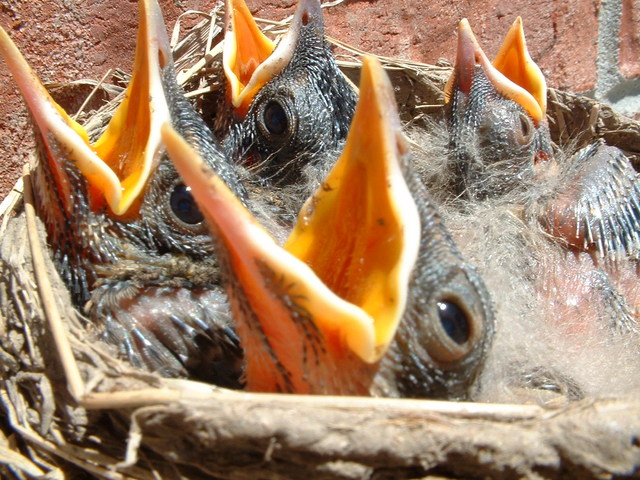
Think of the above as the way I'm beginning to feel about my to-do list, from the view of the mother bird. One of those weeks, but I did manage to get a note off to super-Webmaven Heidi Mack to let her know about a few additions and changes to my schedule of public appearances. So, if you're wondering if I'll be in your area any time soon, you should take a look at this page of my site.
Photo above used courtesy of Shadetree, from morguefile.com.
Monday, February 26, 2007
The Magical Mystery Tour is waiting to take you away...
Okay, a bus from Vroman's Bookstore with yours truly aboard is waiting to take you to Westwood...hop aboard with me and you'll miss all the traffic and parking hassles at the LA Times Festival of Books!
Here's the deal:
I'm going to be at the Los Angeles Times Festival of Books on April 28th, and I'm getting there and back in a really fun way -- even if I do have to be alert at 8:30 AM!
Vroman's, the fabulous independent bookstore in Pasadena, California (which you should check out online, even if you are nowhere near this state) has kindly invited me to be one of the authors for its 6th Annual Book Bus Ride to the L.A. Times Festival of Books. As their site says:
For reservations, please call Vroman's Customer Service at (626) 449-5320.
Here's the deal:
I'm going to be at the Los Angeles Times Festival of Books on April 28th, and I'm getting there and back in a really fun way -- even if I do have to be alert at 8:30 AM!
Vroman's, the fabulous independent bookstore in Pasadena, California (which you should check out online, even if you are nowhere near this state) has kindly invited me to be one of the authors for its 6th Annual Book Bus Ride to the L.A. Times Festival of Books. As their site says:
Join us Saturday, April 28 for a day that begins with a bagel & juice breakfast before our 8:30 a.m. departure, a Vroman's Book Bus hat, a bag full of books & goodies, games and prizes, milk & cookies for the ride home, and a 20% off coupon good April 28 - May 4 at our main store.Tickets are $45+tax per person, and they sell out every year -- so sign up early to reserve your seat! If you want to be on the bus I'm on, be sure to tell them your preference when you make reservations.
For reservations, please call Vroman's Customer Service at (626) 449-5320.
Friday, February 23, 2007
Back home -- kind of
I'm back from the road, but tomorrow I'll be in San Clemente, California for their sold-out Friends of the San Clemente Library event. You have to love a community that shows that much support for its library!
Saturday, February 17, 2007
On my way to the Alamo
The American Academy of Forensic Sciences meetings are in San Antonio this week, so I'm off to Texas for a few days.
I love these meetings, although due to my obligations for the Crime Lab Project, I participate in them a little differently than I did a few years ago. And because I'm trying to finish a book and have a speaking engagement here in California next weekend, I won't be able to stay for the entire meeting.
But while I can, I'll enjoy the company of some of the most dedicated men and women I have the honor to know. I hope you'll continue to ask your legislatures to give them better funding for their work.
I'll catch up with you here whenever I can!
I love these meetings, although due to my obligations for the Crime Lab Project, I participate in them a little differently than I did a few years ago. And because I'm trying to finish a book and have a speaking engagement here in California next weekend, I won't be able to stay for the entire meeting.
But while I can, I'll enjoy the company of some of the most dedicated men and women I have the honor to know. I hope you'll continue to ask your legislatures to give them better funding for their work.
I'll catch up with you here whenever I can!
Thursday, February 15, 2007
Learning Anatomy the Hard Way
This story on a late 18th/early 19th English surgeon who reputedly benefited from a team of grave robbers caught my eye and made me think again of how dangerous it was to study anatomy before anyone had a good notion of germ theory or antibiotics on hand.
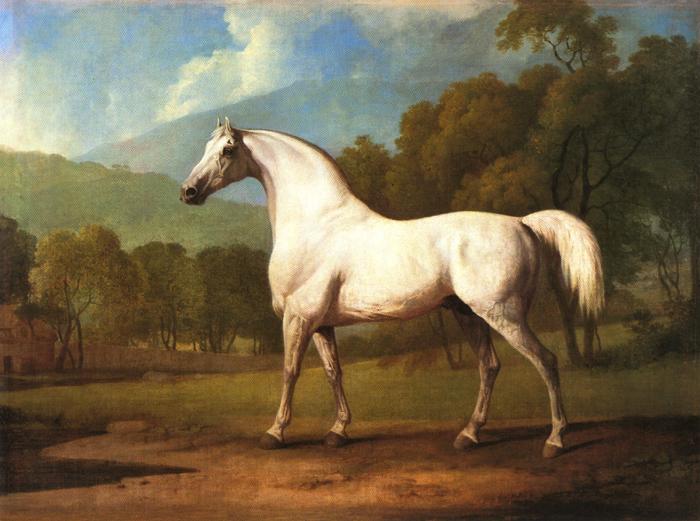
But doctors weren't the only ones risking their health to study anatomy. Veterinarians and artists who made studies of animal anatomy often did so at their peril. If you've read the most recent issue of Bark Magazine, which has several great articles in it, you may have also seen the one about artist George Stubbs (1724-1806), whose paintings (like the one above) of animals broke new ground in part because he was an avid student of human and animal anatomy — he taught at a school of medicine at one point, and published works on anatomy.
If you are anywhere near the Frick in New York, take the opportunity to see a special exhibit of his work. It's only there between now and May 27, and this is its only stop in the U.S..
Wednesday, February 14, 2007
Forensic University
I'm excited about a new event, one that Sisters in Crime is sponsoring. It's a four-day event on forensic science, called Forensic University of St. Louis, "50 Ways to Catch a Killer."
I'll be blogging about it here.
But don't worry -- I'll be back with thoughts on all kinds of things that have come to mind lately.
Right, as if you worried....
I'll be blogging about it here.
But don't worry -- I'll be back with thoughts on all kinds of things that have come to mind lately.
Right, as if you worried....
Here's the missing photo from the Buffalo post
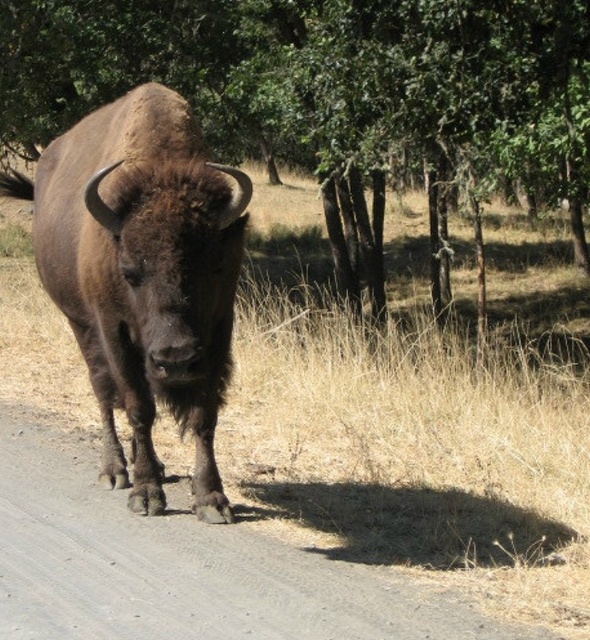
This guy is much warmer than the city at the moment.
The photo is used courtesy of dayleemojo, from morguefile.com.
Thursday, February 08, 2007
Off to Buffalo
I probably won't post for a few days -- I'm on my way to Buffalo, New York.
Yes, I know it's February, and what happens there in February.
Don't worry 'bout this Californian.
Writing while snowbound is actually rather wonderful.
At least, it is when you get to decide that you've had enough of snow.
Had another photo I wanted to use here, but when it comes to images, Blogger and I are apparently not working together well these past few days. Keep getting error messages.
[Update: Addded irritation now that I finally have Internet access again -- this post, from Thursday, didn't make it to the blog. So, greetings from JFK airport, and I'll hope to overcome all these blogstacles!!!]
Yes, I know it's February, and what happens there in February.
Don't worry 'bout this Californian.
Writing while snowbound is actually rather wonderful.
At least, it is when you get to decide that you've had enough of snow.
Had another photo I wanted to use here, but when it comes to images, Blogger and I are apparently not working together well these past few days. Keep getting error messages.
[Update: Addded irritation now that I finally have Internet access again -- this post, from Thursday, didn't make it to the blog. So, greetings from JFK airport, and I'll hope to overcome all these blogstacles!!!]
Wednesday, February 07, 2007
Perspective

In 2005, when a television reporter in Madison Wisconsin walked into a Beliot radio station and acted strangely — pulled out a gun, reportedly made threatening comments to a DJ, said something about being an undercover CIA agent — he was arrested. He underwent psychological evaluation, was ultimately found not guilty by reason of "mental disease or defect," and was placed in a treatment plan. I'm glad no one was hurt. I also think it's good that no one got too carried away in analyzing the event, or went too wild blowing it out of proportion.
You may wonder why I bring this up. I want to point out that no one at the time suggested that everyone at the television station he worked for needed re-evaluation, that the station should lose advertising dollars, or that being a television reporter held inherent risks to one's mental health. (Whatever people may think privately about the latter.)
And yet, over the past few days, I've heard comments along these lines following the arrest of a member of the space program.
The trauma of the victim in the case in the news should not be minimized. My heart goes out to her.
I don't know enough about the accused or what happened to want to try a case on my blog. I'll leave that to the justice system. I just want to say that those who are making loosey-goosey statements about how the astronaut's alleged actions reflect on the space program should step back a minute and get some perspective.
Take any profession that has been around for more than an afternoon, and you will very likely find someone in it who has behaved less than rationally. Among those who've endangered the lives of others when perhaps not in their right minds: doctors, Members of Congress, Vice Presidents (I'm thinking Aaron Burr, ladies and gentlemen -- my story and I'm sticking to it), pilots and...you get the picture. You probably get the big picture.
Of course there are concerns that someone who might be suffering a mental illness could endanger lives. (Every day, supposedly perfectly rational people probably cause far more deaths than the mentally ill, but let's not quibble.)
From all I've heard from interviewed psychologists offering opinions about her case from afar, it's unlikely that most screening processes would have identified this woman as having a problem. And unlikely that she would have identified herself in this way. I don't know.
What I do know is that it's a sad story, all the way around.
And one that has nothing to do with the importance of the space program.
Let's not get carried away.
Let's keep reaching for the stars.
[Update on photo: as you can see, the problem seems to be worked out.]
Image credit: NASA, ESA, and The Hubble Heritage Team (STScI/AURA) "This image from NASA's Hubble Space Telescope shows the diverse collection of galaxies 450 million light-years away in cluster Abell S0740 near the constellation Centaurus."
Another Fun Discovery - Thanks to Timbrely!
Okay, I am going to have to spend lots more time on this site and looking at the T-shirts, but I think I'm already in love with Jessica Hagy's Indexed. Today's "We're All Going to Hell" is just one example of her fascinating ability to say it all on an index card with one graphic.
Take a look at "Sometimes Average is Good."
Or, "There Must Be A Catch."
And if you read the Irene Kelly short story "Call It Macaroni," then you can understand why I like "Nourishing."
Timbrely, thanks again!
Take a look at "Sometimes Average is Good."
Or, "There Must Be A Catch."
And if you read the Irene Kelly short story "Call It Macaroni," then you can understand why I like "Nourishing."
Timbrely, thanks again!
Monday, February 05, 2007
On Detectives Not Detecting

I promised Mary-Frances I'd say more about this, so here goes ...
A couple of years ago, I interviewed editors and agents for a column I used to write for a mystery writers publication. Almost all of them said that one of the biggest problems they find in manuscripts by new mystery writers is that the detective does little or no detecting. "Detective" is used here in an informal sense -- the protagonist of the mystery, whether or not he or she is with law enforcement or is a private eye.
Now, to readers, this might seem like a problem that should be obvious to a writer, but it is easy to let it creep up on you when you are the person creating the work word by word, line by line, page by page.
It's especially easy to turn your detective into what I call the Serial Interviewer — the Serial Interviewer is nearly as common in crime fiction as the serial killer, and to my mind, just as deadly when it comes to reader interest. This is a detective who never really solves anything or puts two and two together. Throughout the book, he spends most of his time visiting other characters and talking to them. Bit by bit, they tell him everything. Eventually, someone tells him who committed the murder. Quite often, it's the murderer himself, confessing — holding a gun on the hero, no doubt. He'll be foiled at the last moment, but not before he supplies all the answers for the idiot in his gun sights.
You should try to come up with something a little better than the Serial Interviewer.
By no means am I suggesting that your detective shouldn't question witnesses and others. She can meet intriguing (and possibly guilty) characters, and you can increase tension in the book through these encounters. We can see her act as an observer of persons and their habits.
There's a fine old tradition of this sort of thing in the mystery novel, and some of the best humor in them has come from such encounters. Alas, it often seems as if the people who love the witty observations and repartee of Chandler's Marlowe and Hammett's Continental Op have failed to notice that both characters also solve crimes. They do talk to lots of folks, skewer some, and snap out comebacks -- but they also do some real thinking.
A detective needs to notice things other characters aren't seeing — and at the end of the day, we shouldn't be wondering if all the other characters have missed clues because they are walking while comatose. A detective has to draw conclusions others might reasonably fail to make. He or she should be actively involved in solving the crime -- not passively collecting solutions. Even an armchair detective like Nero Wolfe is more active than passive -- he uses his mind, has the ability to sift through information to arrive at a logical conclusion. Ideally, the reader has also had the opportunity to observe and gather information at the detective's side, but hasn't necessarily recognized the significance of important clues.
(If you're writing a book of suspense or a thriller, some of your tasks may be different than those of writers of detective fiction. That doesn't mean your hero should be passive, though.)
This business of the detecting detective is also one of several reasons why learning about forensic science is a starting point rather than an ending point for writing a mystery novel. Simply having an unusual idea about how someone might be killed or having an idea for a single clue or piece of evidence is nowhere near what you need to write a novel. Among many other obligations to your reader, you have to figure out how the detective will find the key to the meaning of the evidence. You also have to make it clear how the detective arrived at an answer when others didn't.
So look through that manuscript before you send it off, and ask yourself if your detective is carrying the story forward, or simply being swept along on a tide of readily available information. If you work to make the hero more active, you'll increase the possibility of selling your book.
Just my opinion on the matter — in the end, you get to try it your way.
Photo above courtesy of Clarita, who kindly made it available on morguefile.com.
Sunday, February 04, 2007
Back again

Briefly, anyway.
Just returned from LCC 2007. Andi and all the other volunteers (I'm not forgetting you, Stu!) did a fabulous job of running this convention. As usual, I didn't get enough time with all the people I wanted to see. Seattle is a great place to hold a meeting -- lots to see and do and plenty of wonderful eateries, too. I made my usual pilgrimage to Wild Ginger.
The forensic panels went very well -- many thanks to those who came to hear those sessions. I also enjoyed doing the LCC 101 panel with Janet Rudolph of Mystery Readers International.
I now return you to your regularly scheduled Internet -- I'm off to do some laundry!
Above: This lovely photo of Seattle, taken from the Bainbridge Ferry, is used courtesy of Carrie Hosfeldt, who has my thanks for making it available on morguefile.com
Monday, January 29, 2007
I did tell you I was born in Texas, right?
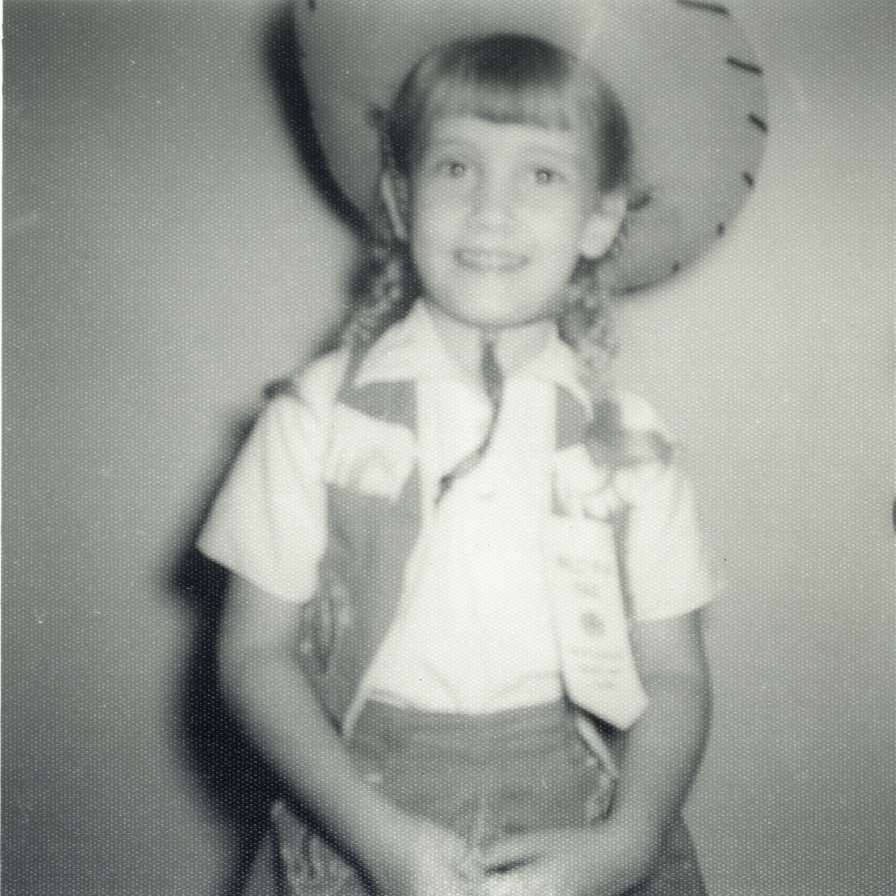
The photo above is one of the reasons why I haven't been here much over the past few days. For a project involving my alma mater, CSULB, I was asked to scan and submit a few photos from childhood to present day.
This, in its turn, required access to the distant part of my garage (a distance measured in density of obstacles, and on that scale, think Everest), an area which might possibly house old photos. Of course, I checked there only after dismantling a couple of storage possibilities within the house. I did find some photos in the house, and I have decided that nothing can slow a person down like finding old photos. Just hard to flip past pictures of fondly remembered people, places, and events.
So, the scaling of Mt. Burke-Garage had a side benefit -- we now have about 20 boxes of books to take to the library, and another pile of to-be-donated goods that will probably go to Goodwill. Oh, and you can now walk from the front to the back of the garage without turning sideways or doing the limbo. Today I broke through to the photo section and found enough useable material to scan and send on to the university.
I'm going to be getting ready for events in Seattle, so you probably won't hear from me unless I get a chance to post from the convention. Hope to see some of you at Left Coast Crime!
Friday, January 26, 2007
Finders Keepers
The easiest way for me to lose a bunch of stuff all at once is to clean the house for company. So I'm still looking for objects lost in December.
But my husband has made sure that I no longer lose my keys or my purse somewhere within my own home. Hunting them down has, on occasion, taken a great deal of time. But now, for all those people who set down groceries, bring the dogs back inside, answer the phone while putting away frozen foods, have to look up something on e-mail for the person on the phone, and then can't the keys a day later....there's this marvy gizmo!
And oh yes, I've used it already!
But my husband has made sure that I no longer lose my keys or my purse somewhere within my own home. Hunting them down has, on occasion, taken a great deal of time. But now, for all those people who set down groceries, bring the dogs back inside, answer the phone while putting away frozen foods, have to look up something on e-mail for the person on the phone, and then can't the keys a day later....there's this marvy gizmo!
And oh yes, I've used it already!
Monday, January 22, 2007
Barbara Seranella, 1956-2007

I'm so very sad to learn of the death of Barbara Seranella on January 21.
The mystery-writing community is a relatively collegial one. You meet some fine people within it. Barbara was one of the finest.
Her talent as a writer is unquestioned. I met her at an event in Laguna Beach, just after her first book was published. We were in the same general neck of the woods, and our paths kept crossing. Lucky me.
She was such a good person. And a hell of a lot of fun.
She had a smile that could light up a room. If you can't tell that from the photo above, look at this picture and you'll see what I mean. No one ever spent much time around her without realizing that she had a marvelous sense of humor and a quick wit. The last time I saw her, at Bouchercon, she made an auditorium full of people laugh — and accepted an Anthony Award for Best Short Story.
She never tried to fool anyone about who she was or where she had been. She had a kind of rare courage. Walking redemption. I admired her.
But that description doesn't let you know how very kind she was, or a dozen other things you should know about her.
Her life was a story of second chances. She was brave enough to take them and made the most of them. I kept hoping she'd keep getting them, but it wasn't to be.
Our profound loss.
Photo above from an AAUW in Torrance event about five or six years ago. Me, Stephen Cannell, Barbara Seranella, Martin Smith.
Saturday, January 20, 2007
A Backlog Story: Part 2
If you're just tuning in -- you may want to read yesterday's post first.
So the Worthington case brought attention to the Massachusetts State Lab's DNA backlog, which stood at around 1000 cases in 2005.
Now, before I go further in this story, let's take a brief look at the word backlog. Every jurisdiction comes up with its own meaning for this term, and you should be aware of some factors that influence how labs define them.
First, they differentiate between "cases" and "samples." For DNA, a single case can include dozens (or dozens and dozens) of samples to be processed, or very few samples, down to one -- depending on what kind of case it is, how much biological evidence was available, and whether the people collecting the evidence were trained (at all, or well) and if they are feeling encouraged/discouraged about their lab.
Second, labs talk about two types of backlogs: 1) Those for cases -- items to be processed from crime scenes, victims, and those taken from suspects. 2) Those for databases -- the DNA samples taken from anyone required by that state's laws to submit them. That can range from those convicted of specific violent felonies to those convicted of any felony. (Some states, including California, have plans to eventually include felony arrestees, although this will doubtless face some court challenges.) This second group is where DNA "cold hits" come from -- a DNA match in a case when there is no previously known suspect.
Third, in an effort to control backlogs, labs may limit what may be submitted to them. This seems to have been the case in Massachusetts. An Associated Press article by Theo Emery, published across the country in May, 2005 (I saw it in the Houston Chronicle on 5/8/05), said
Finally, labs do not have a set criteria for what constitutes a DNA sample that is "backlogged." Some will say 30 days. Others will say 90 days. Or more. There's no universally agreed-upon definition.
But by any of these definitions, Massachusetts law enforcement agencies that use the state lab had been waiting for results in 1000 cases. For each of those cases, someone who should have been held might be committing other crimes. Someone who was trying to investigate the crime had to use more time-consuming (and perhaps less reliable) methods of investigation, victims and their families waited for answers, and in all likelihood, some people who were innocent were under suspicion or denied their freedom.
In 2005, the state DNA lab operations had 12 analysts and their equipment squeezed into an 840-square-foot space. Six to nine months was the standard turnaround for cases submitted to the lab.
The Massachusetts Legislature realized that these were undesirable conditions, and increased the funding of the lab from $6.2 million in fiscal 2005 to $16.2 million in fiscal 2007. They also created a new position in government -- Undersecretary for Forensic Sciences, part of the state's Office of Public Safety. This position was to provide oversight for improvements at the lab and the state medical examiner's office.
Keep in mind that no one gets money the day the Legislature takes a vote. But everyone seems to agree that things started to change for the better. Governor Romney sought additional money to build larger, more modern facilities, and a few months ago -- last August -- a new 12,000-square-foot addition was made to the lab. The lab itself has been in the process of being revamped.
Then on January 12, reports of an announcement from the State Police sent another kind of shock wave through Massachusetts: Robert E. Pino, a civilian administrator, was accused of delaying reports of matches in the state's CODIS system with evidence tested in eleven Massachusetts "cold case" rape cases. These delays meant the cases could not be prosecuted, because while delayed, the Massachusetts 15-year statute of limitations expired. Also, according to the Boston Globe,
If rapists are allowed to be free, if new attacks could have been prevented, if rape victims are denied justice because a lab employee didn't do his job, and if there is no reasonable explanation why he didn't do it (such as an overwhelming workload that one person couldn't reasonably cope with), this is a grave matter and there should be consequences for those responsible. And the lab does need to remedy any problems in its system of oversight that may have allowed such problems to occur.
I don't intend to speculate on Mr. Pino's possible guilt or innocence regarding these allegations. But I do hope that Massachusetts State Senator Jarrett T. Barrios has been misquoted. According to the Globe, he said these developments were especially alarming because of the money recently given to the lab, and added:
The Massachusetts District Attorneys Association has said the lab has dramatically improved overall in recent years. It would be good to know how many cases have been successfully handled by the lab, how much matters have improved. Because I imagine if you talk to the victims and families of victims of those crimes, no one will feel that the money invested in the lab has been misspent.
I think the Senator owes the other workers in the lab an apology.
So the Worthington case brought attention to the Massachusetts State Lab's DNA backlog, which stood at around 1000 cases in 2005.
Now, before I go further in this story, let's take a brief look at the word backlog. Every jurisdiction comes up with its own meaning for this term, and you should be aware of some factors that influence how labs define them.
First, they differentiate between "cases" and "samples." For DNA, a single case can include dozens (or dozens and dozens) of samples to be processed, or very few samples, down to one -- depending on what kind of case it is, how much biological evidence was available, and whether the people collecting the evidence were trained (at all, or well) and if they are feeling encouraged/discouraged about their lab.
Second, labs talk about two types of backlogs: 1) Those for cases -- items to be processed from crime scenes, victims, and those taken from suspects. 2) Those for databases -- the DNA samples taken from anyone required by that state's laws to submit them. That can range from those convicted of specific violent felonies to those convicted of any felony. (Some states, including California, have plans to eventually include felony arrestees, although this will doubtless face some court challenges.) This second group is where DNA "cold hits" come from -- a DNA match in a case when there is no previously known suspect.
Third, in an effort to control backlogs, labs may limit what may be submitted to them. This seems to have been the case in Massachusetts. An Associated Press article by Theo Emery, published across the country in May, 2005 (I saw it in the Houston Chronicle on 5/8/05), said
...The [Massachusetts] state crime lab is so understaffed and underfunded it has to ration how many tests law enforcement agencies may submit...Some might say (I would be one) therefore, that this 1000 case backlog was actually artifically lowered. If you are behind on what's submitted, that's one number. If you refuse to allow more than 4 samples from each county into the flow, we're missing the real number -- add in all the cases in those counties that could benefit from DNA analysis and which are not in the chosen 4 samples.Each month, the state's 11 district attorneys are allowed to submit only four DNA samples.
"All the DAs are ludicrously handicapped in the number of cases that they can present to the lab," said Geline Williams, executive director of the Massachusetts District Attorneys Association....
Finally, labs do not have a set criteria for what constitutes a DNA sample that is "backlogged." Some will say 30 days. Others will say 90 days. Or more. There's no universally agreed-upon definition.
But by any of these definitions, Massachusetts law enforcement agencies that use the state lab had been waiting for results in 1000 cases. For each of those cases, someone who should have been held might be committing other crimes. Someone who was trying to investigate the crime had to use more time-consuming (and perhaps less reliable) methods of investigation, victims and their families waited for answers, and in all likelihood, some people who were innocent were under suspicion or denied their freedom.
In 2005, the state DNA lab operations had 12 analysts and their equipment squeezed into an 840-square-foot space. Six to nine months was the standard turnaround for cases submitted to the lab.
The Massachusetts Legislature realized that these were undesirable conditions, and increased the funding of the lab from $6.2 million in fiscal 2005 to $16.2 million in fiscal 2007. They also created a new position in government -- Undersecretary for Forensic Sciences, part of the state's Office of Public Safety. This position was to provide oversight for improvements at the lab and the state medical examiner's office.
Keep in mind that no one gets money the day the Legislature takes a vote. But everyone seems to agree that things started to change for the better. Governor Romney sought additional money to build larger, more modern facilities, and a few months ago -- last August -- a new 12,000-square-foot addition was made to the lab. The lab itself has been in the process of being revamped.
Then on January 12, reports of an announcement from the State Police sent another kind of shock wave through Massachusetts: Robert E. Pino, a civilian administrator, was accused of delaying reports of matches in the state's CODIS system with evidence tested in eleven Massachusetts "cold case" rape cases. These delays meant the cases could not be prosecuted, because while delayed, the Massachusetts 15-year statute of limitations expired. Also, according to the Boston Globe,
...In four cases, Pino prepared reports to police saying that tests linked DNA recovered at crime scenes to suspects, when, in fact, they had not. Pino did not mail all four reports, and no one was arrested because other officials discovered Pino's mistake....All of this is still under investigation and while Mr. Pino has been suspended, it is important to note that no charges have been filed. Also, the reported problems were not in the actual analysis of DNA. According to a story in the Boston Globe, his union, the Massachusetts Organization of State Engineers and Scientists, has defended him:
The union representing a suspended DNA database administrator at the State Police crime laboratory yesterday blamed any delays or DNA mismatches at the lab on a longstanding problem of understaffing and inadequate funding.The FBI is currently auditing the lab. The state has started work on its own investigation into what went wrong, and how future problems may be prevented -- one apparent problem: "The administrator alone appeared to control the reporting of DNA test results to police and prosecutors." Other officials have expressed concern that defense attorneys will react with a flood of motions challenging convictions.
If rapists are allowed to be free, if new attacks could have been prevented, if rape victims are denied justice because a lab employee didn't do his job, and if there is no reasonable explanation why he didn't do it (such as an overwhelming workload that one person couldn't reasonably cope with), this is a grave matter and there should be consequences for those responsible. And the lab does need to remedy any problems in its system of oversight that may have allowed such problems to occur.
I don't intend to speculate on Mr. Pino's possible guilt or innocence regarding these allegations. But I do hope that Massachusetts State Senator Jarrett T. Barrios has been misquoted. According to the Globe, he said these developments were especially alarming because of the money recently given to the lab, and added:
"The public has a right to know why their dollars, apparently, have been misspent."Say what? Misspent? You've had an understaffed lab operating out of a broom closet for a dozen years, a thousand or more cases not even being analysed, and if one man screwed up in the way some claim he has, then all the money has been misspent????
The Massachusetts District Attorneys Association has said the lab has dramatically improved overall in recent years. It would be good to know how many cases have been successfully handled by the lab, how much matters have improved. Because I imagine if you talk to the victims and families of victims of those crimes, no one will feel that the money invested in the lab has been misspent.
I think the Senator owes the other workers in the lab an apology.
Friday, January 19, 2007
A Backlog Story: Part 1
Despite what you see on TV, most crime labs are under-funded. You've probably received that message if you've been reading here for a while.
Labs aren't just a little bit short of change when it comes to buying new gadgets. A great many of this country's forensic scientists are working in tiny, inadequate spaces and using outdated equipment and technologies. Their labs can't properly store or track evidence and are having trouble paying enough to their staffs to retain them. The labs are trying to cope with overwhelming backlogs -- untested evidence piles up quickly, rates of solving crimes slow.
Why does this happen? Those who make decisions about spending tax dollars on law enforcement and criminal justice usually don't make labs a priority. There are a variety of reasons for this, some understandable, others god-awful, but the only thing that seems to make a difference in priorities is public pressure. Unfortunately, the problems of labs are a reality that most people don't seem to grasp. (This is exactly why the Crime Lab Project got underway.)
Sometimes, one case makes a difference to a lab, can help the public to see the reality.
The January 6, 2002 high profile murder of fashion writer Christa Worthington in her Cape Cod home was such a case. Although there was DNA evidence at the scene, the case went unsolved. You can see from this 2003 story by CBS that theories abounded -- as did books and stories that "fictionalized" the facts and further scandalized -- but law enforcement hoped for help from DNA:
When the public realized that the sample of McCowen's DNA had been sitting untested in the state lab for almost a year before the crime was solved, a hue and cry went up that was heard across the country. The price of backlogs had been brought home: a violent criminal had been left free -- and free to possibly commit other crimes; the innocent were forced to live under a cloud of suspicion; the family, friends, and community of the victim were left without answers.
There was little mystery about the cause of the delay. The under-funded crime lab didn't have the resources to process all the evidence submitted to it. The legislature declared it was a shame (without always owning up to the fact that it was a shame partly of their own making) and an outrage and they would have no more of it -- they voted millions more dollars to the state lab.
But as events proved last week, the lab's troubles weren't over.
Labs aren't just a little bit short of change when it comes to buying new gadgets. A great many of this country's forensic scientists are working in tiny, inadequate spaces and using outdated equipment and technologies. Their labs can't properly store or track evidence and are having trouble paying enough to their staffs to retain them. The labs are trying to cope with overwhelming backlogs -- untested evidence piles up quickly, rates of solving crimes slow.
Why does this happen? Those who make decisions about spending tax dollars on law enforcement and criminal justice usually don't make labs a priority. There are a variety of reasons for this, some understandable, others god-awful, but the only thing that seems to make a difference in priorities is public pressure. Unfortunately, the problems of labs are a reality that most people don't seem to grasp. (This is exactly why the Crime Lab Project got underway.)
Sometimes, one case makes a difference to a lab, can help the public to see the reality.
The January 6, 2002 high profile murder of fashion writer Christa Worthington in her Cape Cod home was such a case. Although there was DNA evidence at the scene, the case went unsolved. You can see from this 2003 story by CBS that theories abounded -- as did books and stories that "fictionalized" the facts and further scandalized -- but law enforcement hoped for help from DNA:
District attorney Michael O'Keefe says recently revealed DNA evidence shows that within hours of her death, Christa Worthington had sex [with] - for now, a mystery man.Frustrated for three years, in 2005 investigators even tried collecting -- on a voluntary (and controversial) basis -- DNA swabs from local men to look for a match. Part of the controversy stemmed from the fact that the lab was already backlogged. Before any of the hundreds of volunteered samples were tested, the match came through a sample collected in March 2004, in an earlier effort to eliminate suspects. The match was to Christopher M. McCowen, who has since been convicted of the murder.
"It's DNA of an unknown male that's consistent with someone having had sexual relations with the victim," says O'Keefe. "And it's that DNA that we seek to match."
When the public realized that the sample of McCowen's DNA had been sitting untested in the state lab for almost a year before the crime was solved, a hue and cry went up that was heard across the country. The price of backlogs had been brought home: a violent criminal had been left free -- and free to possibly commit other crimes; the innocent were forced to live under a cloud of suspicion; the family, friends, and community of the victim were left without answers.
There was little mystery about the cause of the delay. The under-funded crime lab didn't have the resources to process all the evidence submitted to it. The legislature declared it was a shame (without always owning up to the fact that it was a shame partly of their own making) and an outrage and they would have no more of it -- they voted millions more dollars to the state lab.
But as events proved last week, the lab's troubles weren't over.
Thursday, January 18, 2007
She Probably Has the Time to Do the Time
If you've read the post about outdoing the Grinch, you may remember Jessica Hardy, convicted of forgery and taking funds from the Make-A-Wish chapter in her part of Pennsylvania. It was quite a scheme -- she invented children, faked doctors' reports on them, and raised money on their "behalf." Then bought SuperBowl tickets, took her family to Disney World, and bought a bunch of other stuff.
Yesterday the judge in the case decided that her crimes and lack of remorse deserved three to six years in prison. For more details, read the WNEP story by Sarah Buynovsky and Andy Palumbo here.
It's not just a matter of someone being greedy in an especially reprehensible way, of course. Co-workers lost their jobs. The local chapter was closed down. Donations to Make-A-Wish were down all across the country as a result of her actions. In three years she could be out, but its probably already too late for some of the real kids who would have been granted wishes with the money she spent on herself.
Yesterday the judge in the case decided that her crimes and lack of remorse deserved three to six years in prison. For more details, read the WNEP story by Sarah Buynovsky and Andy Palumbo here.
It's not just a matter of someone being greedy in an especially reprehensible way, of course. Co-workers lost their jobs. The local chapter was closed down. Donations to Make-A-Wish were down all across the country as a result of her actions. In three years she could be out, but its probably already too late for some of the real kids who would have been granted wishes with the money she spent on herself.
Wednesday, January 17, 2007
Walking the walk

Yes, still working....but while I write and try to get materials ready for LCC and all kinds of things you probably don't want to be bothered reading about, check out this cool site from Google Maps -- an online pedometer.
What you can do with this is chart out a route for a walk or a run and be able to see the distance of each leg of your travel.
Tim let me know about this one. I believe his secret plan worked -- I see we'll need to go back to one of the longer routes for our walks.
Photo above courtesy of bamagirl, from morguefile.com.
Monday, January 15, 2007
Yep, I'm on a weird news kick
(Dusty, that "Yep" is for you.)
Since Britches is 0-2 in his battle against striped wildlife, if we go up to Canada to help this poor skunk get back home, we'll probably leave Britches and Cappy on this side of the border.
I'm getting some writing done these days, so the story of Britches v Polecats will have to wait.
Since Britches is 0-2 in his battle against striped wildlife, if we go up to Canada to help this poor skunk get back home, we'll probably leave Britches and Cappy on this side of the border.
I'm getting some writing done these days, so the story of Britches v Polecats will have to wait.
Friday, January 12, 2007
Dang, too late to tell them about it now
Before I started working as a writer of crime fiction, I probably would have had a harder time naming friends of mine who would eagerly ask me where they could buy these.
I found the link on Mondo Chicago. Alana Waters, who took the photo, also made some beautiful cards that benefit Hurricane Katrina relief. And oh yes, it's still needed.
I found the link on Mondo Chicago. Alana Waters, who took the photo, also made some beautiful cards that benefit Hurricane Katrina relief. And oh yes, it's still needed.
Thursday, January 11, 2007
Jennifer Jordan Led Me Astray
from doing what I meant to be doing a few minutes ago with an entry on her blog.
So, of course, after I saw her results for the Accent Quiz on the GoToQuiz.com site, I had to take it, and ended up:
The actual accent is mongrel. I was born in Houston, Texas, to parents from Kansas. The first six-and-a-half years of my life were spent there. I retained the accent for quite a while after we moved to California. I was kidded about being "Tex" until about the fifth or sixth grade, and even now, people catch me saying all kinds of words in the Lone Star style. Then, after lots of influence from the West coast, I married this fellow from Buffalo, who teaches subjects including accent elimination, and has tried (without consistent success) to teach me the difference between "pin" and "pen."
All of this proves that I may be edging toward the 26% in this article, called to my attention by my sister Sandra, who should have been doing other things, too.
I'm not there yet, though. I did finish a chapter today. I may finish a second one before I call it a night.
Wish me luck -- I'm making my own by getting the hell off the Internet. If you heard me say that aloud, you'd tell me I should be on the radio...
So, of course, after I saw her results for the Accent Quiz on the GoToQuiz.com site, I had to take it, and ended up:
Your Result: The Midland
"You have a Midland accent" is just another way of saying "you don't have an accent." You probably are from the Midland (Pennsylvania, southern Ohio, southern Indiana, southern Illinois, and Missouri) but then for all we know you could be from Florida or Charleston or one of those big southern cities like Atlanta or Dallas. You have a good voice for TV and radio.
The actual accent is mongrel. I was born in Houston, Texas, to parents from Kansas. The first six-and-a-half years of my life were spent there. I retained the accent for quite a while after we moved to California. I was kidded about being "Tex" until about the fifth or sixth grade, and even now, people catch me saying all kinds of words in the Lone Star style. Then, after lots of influence from the West coast, I married this fellow from Buffalo, who teaches subjects including accent elimination, and has tried (without consistent success) to teach me the difference between "pin" and "pen."
All of this proves that I may be edging toward the 26% in this article, called to my attention by my sister Sandra, who should have been doing other things, too.
I'm not there yet, though. I did finish a chapter today. I may finish a second one before I call it a night.
Wish me luck -- I'm making my own by getting the hell off the Internet. If you heard me say that aloud, you'd tell me I should be on the radio...
Wonder if it's covered by homeowner's insurance?
Among the stories from the Associated Press today, revenge of the three pigs.
Wednesday, January 10, 2007
TP, where would we be without you?
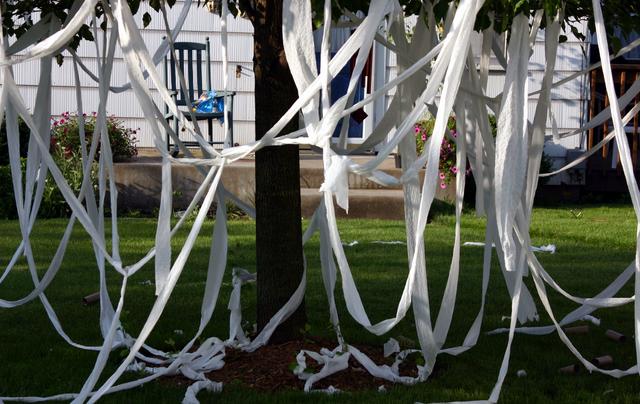
If you've been reading this blog for more than a week you know that just about anything may capture my attention. Today I stumbled across an account of the history of toilet paper. Now, here's an immediate caveat: this is a report from 2001, so all the great strides that have been made in the TP world in the last five or six years are not included.
My favorite quote from the article by Buck Wolf comes from the star of a long-running series of Charmin ads:
Dick Wilson, the vaudeville veteran who portrayed Mr. Whipple on TV, later recalled his agent calling him about the project.
"My agent asked me, 'What do you think of toilet paper?' And I told him, 'I think everybody should use it.'"
Photo above, "TP Tree," courtesy of Click at morguefile.com. He says about it, "Each year, high school graduates target this well-loved elementary school teacher's yard for the ceremonial TP (toilet paper) attack."
Tuesday, January 09, 2007
Fingerprints and ships

There's good news and bad news, as they say.
The good news is that port security is taking another step forward along U.S. coasts, and one measure of that is increased identification requirements and background checks for those driving trucks into and out of port facilities. This hasn't come about without argument, but that's not the bad news.
The bad news is that all across the U.S., we aren't putting the resources needed into fingerprinting. The result is that thousands of criminals who could be identified by prints are not being caught, the ones who are being arrested are too often not fingerprinted, and the FBI, Department of Homeland Security, and State Department do not have fingerprint systems that are interoperable.
Any background check is only as good as the database it's checked against. Think about this -- if the person driving a truck into a port committed a crime involving explosives and was not fingerprinted, the usefulness of background checks and identity checks is limited. If police departments believe they can no longer afford to collect fingerprints at crime scenes, if several incompatible systems are being used, then we're missing important information in these databases.
Photo above courtesy of Digiology, from morguefile.com
Seattle is the place to be in early February
There will be a great line-up at Left Coast Crime 2007 for anyone interested in forensic science. I talked about this in a post here a couple of weeks ago, and now I have more details.
The panels will be held at Left Coast Crime on the afternoon of Friday, February 2, in Seattle, Washington at the Renaissance Hotel, 515 Madison Street. The full convention is nearly sold out (the banquet is definitely sold out), but I think there may be a few more spaces left. Click here for more information on the full convention.
If you can't attend the entire event, LCC is offering day registrations for single days. A single day registration for Friday will give you access to all activities, panels, the book dealer's room, a reception and an auction for $75. These are for walk-in registrations, cash or check only.
Here's the line up:
12-1 PM, "CS I Don't Think So,"
Lee Lofland, Dr. Doug Lyle, Eileen Dreyer, and Jan Burke (m)
We'll be talking about crime labs in fiction and reality, the Crime Lab Project, and current events in forensic science. I'm on this panel with three of the most entertaining (and knowledgeable) people you'll find in the world of crime fiction. I'll tell you more about them soon, but in the meantime, you can read about Eileen, Lee, and Doug at their Web sites.
1-3 PM Washington State Patrol Crime Laboratory Presentations.
Two sessions, one from 1-2, the next from 2-3, with breaks and time for Q&A. These are real-life forensic scientists, and we are so grateful to the WSP lab for sparing them to us to talk about their work. You'll have a chance to hear from:
4-5 PM "Using the Law Realistically," Kate Flora, Aaron Elkins, Anne Jayne, Twist Phelan, Leslie Budewitz (m) As the LCC program page says: "If you watch too much TV, you'll believe DNA results can be gotten in hours, from arrest to trial takes a matter of days, weeks at most, cops never abuse their power, and all labs are shiny and bright (or moody and blue) and run perfectly. Okay, then there's the real world. Experts in forensic science and law talk about what it's really like." These authors are well worth listening to!
So, I hope you'll join me in Seattle!
The panels will be held at Left Coast Crime on the afternoon of Friday, February 2, in Seattle, Washington at the Renaissance Hotel, 515 Madison Street. The full convention is nearly sold out (the banquet is definitely sold out), but I think there may be a few more spaces left. Click here for more information on the full convention.
If you can't attend the entire event, LCC is offering day registrations for single days. A single day registration for Friday will give you access to all activities, panels, the book dealer's room, a reception and an auction for $75. These are for walk-in registrations, cash or check only.
Here's the line up:
12-1 PM, "CS I Don't Think So,"
Lee Lofland, Dr. Doug Lyle, Eileen Dreyer, and Jan Burke (m)
We'll be talking about crime labs in fiction and reality, the Crime Lab Project, and current events in forensic science. I'm on this panel with three of the most entertaining (and knowledgeable) people you'll find in the world of crime fiction. I'll tell you more about them soon, but in the meantime, you can read about Eileen, Lee, and Doug at their Web sites.
1-3 PM Washington State Patrol Crime Laboratory Presentations.
Two sessions, one from 1-2, the next from 2-3, with breaks and time for Q&A. These are real-life forensic scientists, and we are so grateful to the WSP lab for sparing them to us to talk about their work. You'll have a chance to hear from:
- Larry D. Hebert, Manager of the WSP Crime Laboratory Division. He oversees the operation of the Patrol’s seven crime laboratories. Mr. Hebert has testified in 419 criminal trials during his 33-year career, and has expertise in controlled substances, firearms, and crime scene investigation.
- Jean C. Johnston, Manager of the the WSP's Combined DNA Index System (CODIS) Program. A DNA specialist, she has worked on hundreds of forensic cases in her 28-year career, including the Green River Murders.
- James A. Tarver, Manager of the WSP Seattle Crime Laboratory. A deputy sheriff and crime scene investigator, senior criminologist, and forensic document examiner for the Fresno [California] County Sheriff’s Office for 29 years when, after retiring from that position, became employed by the Washington State Patrol (WSP).
- George E. Johnston, WSP Quality Assurance Manager. Mr. Johnston joined WSP in 1980 in the Seattle Crime Laboratory where he specialized in trace evidence examination and crime scene investigation. One of the major events in his 29-year career is the time he spent working on the Green River Murders as a crime scene investigator and in the laboratory analyzing thousands of pieces of trace evidence.
4-5 PM "Using the Law Realistically," Kate Flora, Aaron Elkins, Anne Jayne, Twist Phelan, Leslie Budewitz (m) As the LCC program page says: "If you watch too much TV, you'll believe DNA results can be gotten in hours, from arrest to trial takes a matter of days, weeks at most, cops never abuse their power, and all labs are shiny and bright (or moody and blue) and run perfectly. Okay, then there's the real world. Experts in forensic science and law talk about what it's really like." These authors are well worth listening to!
So, I hope you'll join me in Seattle!
Monday, January 08, 2007
Fun with the CLP News Y- Files
Those of you who know about my involvement in the Crime Lab Project may know that twice a week (most weeks), I produce an e-mailed newsletter, the CLP News. (It's free, and if you'd like to receive it, just send a blank e-mail to CLPNews-subscribe@yahoogroups.com.)
Every now and then, I come across something especially odd, and I put it in a special section of the CLP News known as the Y-Files -- so named because real life is sometimes weirder than the X-Files.
In the past, it has featured stories on
Today, though, we had the rare felicity of two stories with a fashion theme. One was of the young man in Ohio, who with his mother's help, stole a 30-inch baby boa constrictor by wrapping the snake around his neck like the feather kind of boa, and hiding it with his jacket. You'll love to read how they were caught.
The other concerned a bomb -- fortunely discovered by the workers at a Sheboygan Falls Wisconsin laundry facility before it exploded -- apparently a customer who had other plans for it accidentally left it in his clothing.
This is the sort of thing you just can't put into books without a hell of a lot of set up.
Every now and then, I come across something especially odd, and I put it in a special section of the CLP News known as the Y-Files -- so named because real life is sometimes weirder than the X-Files.
In the past, it has featured stories on
- a determined retired fireman doing construction work, who stubbornly tackled the task of digging out a blocked chimney -- where he found a skeleton "with fake fingernails"
- a man who (on April Fool's Day, of all things) accidentally dialed 911 from the cell phone in his pants (the pants wer tight, the cell phone had a feature to dial 911 if you held down the 9), and unwittingly broadcast to a police dispatcher the plans he and a friend were making for a little B&E at a local business
- the man who set fire to his house to get his visitors to leave
- the family that kept grandma in an air-conditioned room, propped up in a chair, "watching" TV for a few years after she had died, because "that was her wish"
- the fellow who warned police (who showed up after he had fired shots toward his neighbor's house) that they shouldn't jump to conclusions about his mother's body being in his freezer.
Today, though, we had the rare felicity of two stories with a fashion theme. One was of the young man in Ohio, who with his mother's help, stole a 30-inch baby boa constrictor by wrapping the snake around his neck like the feather kind of boa, and hiding it with his jacket. You'll love to read how they were caught.
The other concerned a bomb -- fortunely discovered by the workers at a Sheboygan Falls Wisconsin laundry facility before it exploded -- apparently a customer who had other plans for it accidentally left it in his clothing.
This is the sort of thing you just can't put into books without a hell of a lot of set up.
Friday, January 05, 2007
An ME leaves as his office faces budget cuts
An Associated Press story in the 1/1/07 issue of the Springfield State Journal-Register is a tribute to Dr. Edmund Donoghue. After living in Chicago all his life and serving Cook County's Medical Examiner's Office since 1977, Dr. Donoghue decided to leave office rather than to force his office to cope with a mandated 17% budget cut.
The delay of a death certificate can have a huge negative financial effect (almost all financial processes after a death require a death certificate) on a family already struggling with the loss of a loved one.
The next time someone tells you that what coroners and MEs do can wait, because its all about dead people who aren't going anywhere, think of those families.
And you might also think about how many lives may have been saved over the last two decades by tamper-resistant packaging -- in 1982, Donoghue's office discovered that seven mysterious deaths were caused by a malicious person who placed Tylenol tainted with cyanide on grocery store shelves, where it was bought and taken by unsuspecting consumers.
Donoghue's dilemma is being faced by coroners and medical examiners all across the country.Donoghue, a lifelong Chicagoan, is moving to Savannah, Ga., where he'll serve as a regional medical examiner for the Georgia Bureau of Investigation....
Until recently, he said, he was only contemplating retirement. But proposed budget cuts in Cook County - he oversees an office with an $8.6 million budget to process about 10,000 death certificates and perform about 4,000 autopsies annually - tipped the decision, he said.
"They say stick to your core mission, but we don't really have any elective programs," said Donoghue, who fears a proposed 17 percent cut would delay the release of bodies to funeral homes and processing of death certificates.
Toxicology tests, which now take 60 to 90 days and are crucial to criminal investigations, also might take longer if the office is not properly funded, Donoghue said....
The delay of a death certificate can have a huge negative financial effect (almost all financial processes after a death require a death certificate) on a family already struggling with the loss of a loved one.
The next time someone tells you that what coroners and MEs do can wait, because its all about dead people who aren't going anywhere, think of those families.
And you might also think about how many lives may have been saved over the last two decades by tamper-resistant packaging -- in 1982, Donoghue's office discovered that seven mysterious deaths were caused by a malicious person who placed Tylenol tainted with cyanide on grocery store shelves, where it was bought and taken by unsuspecting consumers.
Thursday, January 04, 2007
How to Frustrate an Automated Call Answering System
Lois made a comment about my Get Human post, and it brought back a memory of one of my most ludicrous experiences with an automated call. I was trying to book a train ride from New York to Washington D.C., and when I called Amtrak, I got "Julie, Amtrak's Automated Agent." (If you want an introduction of your own, call 1-800-USARAIL.)
Feel free to offer your own views on the bizarreness of pretending the computer is a woman, or to go into a guessing game about how its name was chosen (what old girlfriend of the head of Amtrak's IT Department is feeling murderous now, whether the woman whose voice is used was really named Julie, what acronym went awry, whether it's Juli, Julie, Julee, Jewelee, Joolie...).
On this occasion, I apparently called just as the mail was delivered while an army of dogwalkers went parading past my house, or someone actually did herd cats and gathered them on my front lawn, because Britches went berserk.
As you can see from the photo above, he's a big dog. What you can't see is that he has a deep, resounding, don't-mess-with-me bark. It fills the house, and since it goes from zero to 8 billion decibels in nothing flat, routinely causes his humans to clutch at their chests.
So instead of hearing me, Amtrak Julie heard Britches.
The conversation went something like this:
AJ: What time of day do you wish to travel?
B: Rwow-rwow-rwow-rwow!
AJ: I'm sorry, I didn't understand your response. What time of day do you wish to travel? You can name a specific time, or just say "morning," "afternoon," or "evening."
B: Rwow! Rwow! Grrrrr.
AJ: I apologize. I still didn't understand your response.
This went on until I stopped laughing and hung up. I booked the train online -- my Mac doesn't respond to barking. Which is a good thing, or heaven knows what the mutts would order while I'm out of town.
Wednesday, January 03, 2007
What? 2007 already?
I know, I know. You're saying, what kind of blogger are you, Burke? You haven't had anything (silly or otherwise) to say in more than a week now.
Not true. I just haven't written it here on my blog.
And that doesn't mean I haven't been thinking of you. I have.
It's just that at this point in my life, it seems I start almost every year by falling behind. The truth is, I'm still dealing with a whole lot of the To Do List from 2006 , and I have noticed that finishing those items hasn't done a thing to mark off items on the 2007 list.
Yesterday's major accomplishment was getting the Christmas lights off the house. They still aren't up in the attic, but at least I'm not among those folks who will be trying to decide if it's worth the effort in August.
Today, I woke up hoping to do some work on my book. Remembered that I had a conference call meeting about the CLP, and a phone interview to do, in preparation for an event in San Clemente. Then there were the e-mails unanswered from December, a receipt that needed to be faxed (someone had waited patiently for it since November), and additional arrangements to be made for the Friday forensic science panels at Left Coast Crime. Here I am at 10:59 PM, about to sign off here and do some writing.
I'm not really complaining. I like being busy, or I wouldn't be. I also like to have lazy time, and I'll confess that I had some of that today, too. A really long, hot bubble bath. Lunch with Tim. A nap. I'll be writing into the night, my natural time to do that. It's all good.
Oh heck -- I just remembered a couple of calls I forgot to make. But I don't think they'd appreciate getting them at...oh, 11:08 PM now.
Hope your New Year is Happy, and just as busy as you want it to be.
Photo above from morguefile.com, courtesy of peachyqueen.
Wednesday, December 27, 2006
Dustjacket art
Dust jacket art is worthy of a blog of its own, and probably, somewhere out there, someone has one up and running. Book collectors in the know learn to spot subtle differences in dust jackets that occur between editions. Some are true connoisseurs of the art itself, and shown covers of a certain era, can name the artists and illustrators of frontpieces and plates.
I love some of the dust jacket art from the late 19th and early 20th centuries.
Frank Krieger of Newport Vintage Books has an intriguing collection of images of dust jackets on his Web site, including these for Rafael Sabatini's novels. N.C. Wyeth (who was the father of Andrew and other famous Wyeth family artists) was among the artists who brought scenes from Sabatini's adventure tales to life.
You might have fun with these Nancy Drew dust jackets from the 1930s and 1940s, many by Russell H. Tandy.
And there is always this site, where you can see the work of Pogany and many others, and read their biographies.
For me, though, nothing beats a little time spent in the virtual art museum of Violet Books' Web site.
How do I feel about the covers on my own books? My books have been wrapped in cover art both delightful, and...umm, not so delightful. (I'm sure readers have their own nominees for the latter category.) I'm also always fascinated to see how the art changes in the editions published in other countries. I think if you look at the International editions pages on my site, you'll see some truly striking cover art, and some that will ... be nominees.
One of the challenges of crime fiction covers, I'm sure, is to come up with images that may be disquieting but which aren't repulsive. In recent years, I've been very pleased with the cover art on my books. I'm especially happy with the work Ray Lundgren has done on the U.S. editions. He's good at capturing some essential something from each of the books for which he's created covers. He manages to do that in a way that always makes me feel drawn to the book while still conveying an intriguing amount of suspense. I can only hope he's elicited the same reaction in my readers!
I love some of the dust jacket art from the late 19th and early 20th centuries.
Frank Krieger of Newport Vintage Books has an intriguing collection of images of dust jackets on his Web site, including these for Rafael Sabatini's novels. N.C. Wyeth (who was the father of Andrew and other famous Wyeth family artists) was among the artists who brought scenes from Sabatini's adventure tales to life.
You might have fun with these Nancy Drew dust jackets from the 1930s and 1940s, many by Russell H. Tandy.
And there is always this site, where you can see the work of Pogany and many others, and read their biographies.
For me, though, nothing beats a little time spent in the virtual art museum of Violet Books' Web site.
How do I feel about the covers on my own books? My books have been wrapped in cover art both delightful, and...umm, not so delightful. (I'm sure readers have their own nominees for the latter category.) I'm also always fascinated to see how the art changes in the editions published in other countries. I think if you look at the International editions pages on my site, you'll see some truly striking cover art, and some that will ... be nominees.
One of the challenges of crime fiction covers, I'm sure, is to come up with images that may be disquieting but which aren't repulsive. In recent years, I've been very pleased with the cover art on my books. I'm especially happy with the work Ray Lundgren has done on the U.S. editions. He's good at capturing some essential something from each of the books for which he's created covers. He manages to do that in a way that always makes me feel drawn to the book while still conveying an intriguing amount of suspense. I can only hope he's elicited the same reaction in my readers!
Thursday, December 21, 2006
Update on Scary Santa: gee, thanks honey
Oh, now I see that this goes way beyond the current crop of traumatized children. Wives are sending in photos of their husbands, young boys screeching on Santa's knee back in the 1950s. Mothers are sending in photos of their (now) adult children.
Either these families have a cruel streak or a good sense of humor. Maybe both.
Either these families have a cruel streak or a good sense of humor. Maybe both.
Scared of Santa?
The Chicago Tribune photo pages are always a fun place to browse, but the folks at the paper really outdo themselves when it comes to St. Nick. First, there is the "Scared of Santa" extravaganza, currently standing at over 140 entries. The faces of the Santas are almost as hilarious as those of the kids. And one can just imagine gleeful parents making their future teenagers squirm by reminding them that a paper with a huge circulation featured a photo of them howling in terror on Santa's lap.
Then, there's the slide show of the July convention of the Amalgamated Order of Real Bearded Santas. Which all goes to show, as the Internet proves on a 24/7 basis, there is something out there for everyone.
The photo of the Victorian (and rather shifty-eyed) Santa above isn't from the ChiTrib, though -- it's a photo by Xandert (aka Dawn Turner) who kindly made it available on morguefile.com.
Monday, December 18, 2006
William Haglund at Left Coast Crime
Just realized I haven't posted anything here since Sunday! Ah, the holidays!
I'll warn you now, then, that new posts may be a bit thin between now and New Year's Day.
Little late, huh?
Which does not mean I'm out of exciting news. If you'll be at Left Coast Crime in Seattle in February, I'll see you there. One reason you haven't heard much from me lately is that -- in addition to a zillion other things I've been up to -- as part of my work for the Crime Lab Project, I'm helping LCC to coordinate some of the forensic science programming. This will take place on Friday, so plan to arrive in Seattle in time for Friday's events!
I think those of you who are interested in forensic science are in for a treat -- not only are people from the Washington State Patrol's Crime Lab going to be there, we've also got some terrific (and entertaining) authors lined up for panels, and I'm especially pleased that forensic anthropologist Dr. William Haglund has agreed to speak at the convention.
Dr. Haglund served as the Director of the International Forensic Program for the Physicians for Human Rights, and is now the senior forensic consultant to the program. His first mission on behalf of PHR was in 1993. He also worked as the Senior Forensic Investigator for the UN International Criminal Tribunal for the Former Yugoslavia and the UN International Criminal Tribunal for Rwanda. For more than a decade, he has been at the forefront of investigations into genocide and war crimes which span the globe -- Cyprus, Guatemala, Honduras, Nigeria, Indonesia, the Philippines, Sri Lanka, Somalia, and many other countries.
Prior to leaving for full-time work on international cases, he worked as the chief medical investigator the King County Medical Examiner's Office. During his 16 years there, he did extensive work on the investigation of the Green River serial killings.
Those of you who have a copy of Bones will see his name in my acknowledgments. I've been to his presentations, and promise you that this is one of those not-to-be-missed events.
I'll warn you now, then, that new posts may be a bit thin between now and New Year's Day.
Little late, huh?
Which does not mean I'm out of exciting news. If you'll be at Left Coast Crime in Seattle in February, I'll see you there. One reason you haven't heard much from me lately is that -- in addition to a zillion other things I've been up to -- as part of my work for the Crime Lab Project, I'm helping LCC to coordinate some of the forensic science programming. This will take place on Friday, so plan to arrive in Seattle in time for Friday's events!
I think those of you who are interested in forensic science are in for a treat -- not only are people from the Washington State Patrol's Crime Lab going to be there, we've also got some terrific (and entertaining) authors lined up for panels, and I'm especially pleased that forensic anthropologist Dr. William Haglund has agreed to speak at the convention.
Dr. Haglund served as the Director of the International Forensic Program for the Physicians for Human Rights, and is now the senior forensic consultant to the program. His first mission on behalf of PHR was in 1993. He also worked as the Senior Forensic Investigator for the UN International Criminal Tribunal for the Former Yugoslavia and the UN International Criminal Tribunal for Rwanda. For more than a decade, he has been at the forefront of investigations into genocide and war crimes which span the globe -- Cyprus, Guatemala, Honduras, Nigeria, Indonesia, the Philippines, Sri Lanka, Somalia, and many other countries.
Prior to leaving for full-time work on international cases, he worked as the chief medical investigator the King County Medical Examiner's Office. During his 16 years there, he did extensive work on the investigation of the Green River serial killings.
Those of you who have a copy of Bones will see his name in my acknowledgments. I've been to his presentations, and promise you that this is one of those not-to-be-missed events.
Sunday, December 17, 2006
Getting Human for the Holidays

You may be aware of this site already, but if not, consider this a gift for the holidays:
Have you ever called a big company, trying to do business by phone, only to
- have to press an endless number of codes?
- have to decide between preset menu choices that don't have anything to do with your reason for calling?
- never reach a human being?
If you are crazed by the difficulty in reaching a human being when you do business by phone with big companies, try going to Get Human (http://gethuman.com )before you make your next call. Paul English, the founder of Get Human, certainly struck a chord with other humans when he first started posting methods to bypass the computers on his blog. What he started has grown into an advocacy movement that has attracted millions of followers. The blog became a Web site with a good-sized database on it.
So, if you are in the U.S., and want to go directly to the database for Get Human, just click here.
That will take you to a list of many big companies, with instructions to help you quickly connect to a human being.
Photo above courtesy of Paul Middlewick, from morguefile.com.
Friday, December 15, 2006
A strong-willed woman
In today's New York Times, there's an article by Andrea Elliot, "From Head Scarf to Army Cap, Making a New Life." It's about a remarkable woman named Fadwa Hamdan, and if you are willing to go through the hoops the NYT requires of those who want to read the paper online (it's free, but the sign up is something else), I think you'll find it worthwhile.
Wednesday, December 13, 2006
How to Make the Grinch Seem Like He Wasn't Such a Bad Guy After All
I'm still shaking my head over a story that appeared yesterday in a Pennsylvania newspaper, the Wilkes-Barre Times-Leader.
"Former Boss of Charity Pleads Guilty," by David Weiss, tells about a woman who was in charge of the local chapter of the Make-A-Wish Foundation, but who may be on her way to prison.
Before I tell you the story, let me say that this is a worthwhile charity that is consistently ranked as one of the best in terms of making good use of donors' money. This one woman's actions should not make anyone hesitate to give to them.
Jessica Hardy was the chair of the charity in her part of Pennsylvania.
Authorities say she made up the names of children she said were terminally ill. Then she forged doctors' signatures on fake medical documents for these fake children.
She then took more than $55,000 donated for these fictional kids to buy herself Super Bowl tickets, a Disney World vacation, a bass guitar for her son, and a few luxury items like a big screen TV.
Okay, I'm trying to picture someone gleefully enjoying the Super Bowl, knowing that this is how they bought their tickets....kicking back and watching the big screen... knowing all the while that real terminally ill kids were hoping and waiting for wishes to be granted.
Hard to imagine, isn't it?
The DA thinks she should do jail time. I hope he gets his wish.
"Former Boss of Charity Pleads Guilty," by David Weiss, tells about a woman who was in charge of the local chapter of the Make-A-Wish Foundation, but who may be on her way to prison.
Before I tell you the story, let me say that this is a worthwhile charity that is consistently ranked as one of the best in terms of making good use of donors' money. This one woman's actions should not make anyone hesitate to give to them.
Jessica Hardy was the chair of the charity in her part of Pennsylvania.
Authorities say she made up the names of children she said were terminally ill. Then she forged doctors' signatures on fake medical documents for these fake children.
She then took more than $55,000 donated for these fictional kids to buy herself Super Bowl tickets, a Disney World vacation, a bass guitar for her son, and a few luxury items like a big screen TV.
Okay, I'm trying to picture someone gleefully enjoying the Super Bowl, knowing that this is how they bought their tickets....kicking back and watching the big screen... knowing all the while that real terminally ill kids were hoping and waiting for wishes to be granted.
Hard to imagine, isn't it?
The DA thinks she should do jail time. I hope he gets his wish.
Monday, December 11, 2006
Getting lost for the sheer pleasure of it
You may have noticed that there isn't a hell of a lot of writing advice on this blog.
That's not because I lack ideas about How It Should Be Done. However, I want to be careful about what I say to new writers, each of whom needs to discover his or her own way to tell a story. I see so many bad examples of advice for new writers.
The best kind of writing teachers seem to me to be the ones who foster the journey of other writers without placing them in harness. They suggest a variety of approaches, they work to motivate and inspire while still providing practical tools and exercises that help with skill-building. I don't mind when someone gives nuts and bolts advice on ways to find agents or shows others how to put a manuscript into a standard format.
But sometimes I read another writer's proclamations about what one must do within the text of a story, or how one must construct its framework, or how one must go about the process -- and frankly, I find myself wanting to laugh.
I'm talking about the folks who seem to believe they picked up their stone tablets at a nearby burning bush. This is how I do it, so you must do it this way. By the way, all three of my best friends in my mutual admiration society write this way, too. Hello, hubris!
As if the universe of creating literature could be distilled into a set of Rules that Work For Everyone. What boring places libraries would be if that was true. Thank God the proclaimers get ignored.
Would we ever think of trying to convince painters or musicians that they must do x, y, or z to create true art? I don't doubt that those artists also have the "EZ Way to Paint a Portrait" or the "EZ Way to Play the Piano" folks in their lives, but it seems to me that uninitiated writers are inundated with advice that consists of oversimplified rules that simply do not hold true for everyone.
Here's my own simple advice to you new writers, so laugh if you will: one of the hardest parts of this endeavor of writing a book is finding your own path and having the courage to stay on it, while still staying open to the possibility that there may be another, better way to get where you're going. How will you know which way is best for you? Keep writing.
Explore. You may end up lost, or you may make fascinating, unexpected discoveries. Personally, I will take being lost (revision allows this to be a relative term, after all) over treading only on the well-worn, previously mapped grid, but you may find the grid is the best way to get where you want to go. Whatever works -- just start stepping.
'S all good....
Photo above, " Stream on the trail of Swift Camp Creek area" by Don Corbin, used with his kind permission, from morguefile.com.
Friday, December 08, 2006
Blog recommendation of the day
If you've read my short story "Call It Macaroni" in Murder Most Crafty, you probably have a sense of how skilled I am in the sewing and crafts departments.
On a scale of zero to one-hundred-and-seventeen, that would be 0.01. (For example, I can sew a button back on, but no guarantee that the button and buttonhole will match up again.)
Which is undoubtedly one of the reasons I adore Threadbared. If you need a laugh, Mary Watkins and Kimbrely Wrenn will...okay, have you in stitches. I'm warning you, do not have liquids in your mouth when you go to this site, or you'll end up having to use up one of your hand-crocheted screen cleaners.
Do not fail to view this one.
I'd write more about this blog, but I've just read the Ho Ho No entry. I'm going to go to work on the ovenmitt candleholders now.
On a scale of zero to one-hundred-and-seventeen, that would be 0.01. (For example, I can sew a button back on, but no guarantee that the button and buttonhole will match up again.)
Which is undoubtedly one of the reasons I adore Threadbared. If you need a laugh, Mary Watkins and Kimbrely Wrenn will...okay, have you in stitches. I'm warning you, do not have liquids in your mouth when you go to this site, or you'll end up having to use up one of your hand-crocheted screen cleaners.
Do not fail to view this one.
I'd write more about this blog, but I've just read the Ho Ho No entry. I'm going to go to work on the ovenmitt candleholders now.
Thursday, December 07, 2006
Julie Smith is teaching writing
I've just learned that while I was touring, my friend Julie Smith started a new kind of distance-learning writing course. It's called Writers Track, and it combines an online course with a set of conference calls that allow students to have personal contact with the instructor.
Julie has been writing for 25 years and is an Edgar-winning author. In fact, when she won the award for best novel in 1991, she broke a long dry spell for American women writers -- no American woman had won the Edgar for Best Novel since 1956. She's a novelist, short story writer, and former reporter -- her journalism career includes long stints on the New Orleans Times-Picayune and San Francisco Chronicle. At the Chronicle, she was the first woman to work in the newsroom since World War II.
So groundbreaking is a kind of habit with Julie, and I'm betting that her courses will be a refreshing change from the run-of-the-mill writing class. She's also someone who works conscientiously and has genuine concern for others, so that will be to your benefit.
No one course will work for everyone, but if you're an aspiring novelist, you may want to take a look to see if this sounds like one that would work for you.
Julie has been writing for 25 years and is an Edgar-winning author. In fact, when she won the award for best novel in 1991, she broke a long dry spell for American women writers -- no American woman had won the Edgar for Best Novel since 1956. She's a novelist, short story writer, and former reporter -- her journalism career includes long stints on the New Orleans Times-Picayune and San Francisco Chronicle. At the Chronicle, she was the first woman to work in the newsroom since World War II.
So groundbreaking is a kind of habit with Julie, and I'm betting that her courses will be a refreshing change from the run-of-the-mill writing class. She's also someone who works conscientiously and has genuine concern for others, so that will be to your benefit.
No one course will work for everyone, but if you're an aspiring novelist, you may want to take a look to see if this sounds like one that would work for you.
Tuesday, December 05, 2006
Gar's Web site
The link for Gar's name in the last post was to an interview. Here's a link to the actual site:
www.garanthonyhaywood.com
The man can write, so if you haven't read his books yet, consider this to be one the best tips you received this month. Even if the month is only a few days old.
www.garanthonyhaywood.com
The man can write, so if you haven't read his books yet, consider this to be one the best tips you received this month. Even if the month is only a few days old.
Saturday, December 02, 2006
I'll never forget old what's-her-name...
Okay, back to the titles stories....
Three Kind of Lies
Remember Me, Irene
I had a new editor about halfway into the process of revising Dear Irene,. For a time, I believed I had talked her into dropping the name Irene from the titles. Don't get me wrong -- I like Irene's name. It's great for her, the character. But as a title, linked with imperatives....well, I believe it was Gar Anthony Haywood (aka Ray Shannon) who predicted that one day I'd write a book entitled Go to the Refrigerator and Get Me a Beer, Irene.
There was also a series about Irene Adler, "the woman" to those familiar with Sherlock Holmes, written by Carole Nelson Douglas. Carole's publisher wanted the name "Irene" in all of her titles too. You can imagine the confusion this caused our readers. For starters, her Irene Adler books take place about 100 years earlier than the Irene Kelly series.
So I was excited that my new editor was listening to ideas for new titles, and I had picked out what I still consider one of my best working titles for the fourth book in the series. New editor, new contract, everything was looking good for the fourth book to be Three Kinds of Lies. Then a single bookseller talked my editor out of it. (Yes, I know who you are, and I, um, can't thank you enough.)
Ironically, when I ask longtime fans to name the books with Irene in the title, they can rattle off the first three, then they stall out on number four. The title Remember Me, Irene is apparently difficult to remember. They'll recall the book and what it's about, but not the title.
C'est ma vie.
Where did the title I wanted originate? In another century.
Benjamin Disraeli, British prime minister in the mid-19th century, said these famous words:
Those of you who have read Remember Me, Irene will know about the connection of statistics to the story.
I didn't get my way on the title, but I did get the best cover I'd had up until then. And the new editor began to patiently teach me a few things I really needed to learn at that point. Which is why, I think, that Hocus marks a change in the series.
Three Kind of Lies
Remember Me, Irene
I had a new editor about halfway into the process of revising Dear Irene,. For a time, I believed I had talked her into dropping the name Irene from the titles. Don't get me wrong -- I like Irene's name. It's great for her, the character. But as a title, linked with imperatives....well, I believe it was Gar Anthony Haywood (aka Ray Shannon) who predicted that one day I'd write a book entitled Go to the Refrigerator and Get Me a Beer, Irene.
There was also a series about Irene Adler, "the woman" to those familiar with Sherlock Holmes, written by Carole Nelson Douglas. Carole's publisher wanted the name "Irene" in all of her titles too. You can imagine the confusion this caused our readers. For starters, her Irene Adler books take place about 100 years earlier than the Irene Kelly series.
So I was excited that my new editor was listening to ideas for new titles, and I had picked out what I still consider one of my best working titles for the fourth book in the series. New editor, new contract, everything was looking good for the fourth book to be Three Kinds of Lies. Then a single bookseller talked my editor out of it. (Yes, I know who you are, and I, um, can't thank you enough.)
Ironically, when I ask longtime fans to name the books with Irene in the title, they can rattle off the first three, then they stall out on number four. The title Remember Me, Irene is apparently difficult to remember. They'll recall the book and what it's about, but not the title.
C'est ma vie.
Where did the title I wanted originate? In another century.
Benjamin Disraeli, British prime minister in the mid-19th century, said these famous words:
There are three kinds of lies: lies, damned lies, and statistics.
Those of you who have read Remember Me, Irene will know about the connection of statistics to the story.
I didn't get my way on the title, but I did get the best cover I'd had up until then. And the new editor began to patiently teach me a few things I really needed to learn at that point. Which is why, I think, that Hocus marks a change in the series.
Friday, December 01, 2006
World Aids Day

I've lost several friends to AIDS.
I hope you'll never have to write that same sentence.
But I also hope that even if you don't know anyone who is HIV positive, you'll contribute to the fight against AIDS, that you'll become informed about this deadly but preventable disease, and that you'll take prevention measures seriously.
Subscribe to:
Comments (Atom)

