Wednesday, May 16, 2007

A Tale of Vampires - Part 4

Yesterday I wrote about the 1990 discovery of the 19th century grave of JB-55 and those of two other individuals buried in the same manner near Griswold, Connecticut. These were not the first known cases of evidence of belief in vampires in New England.

In Rhode Island, state folklorist Michael E Bell, who has found evidence of a least 16 such cases taking place from the mid-18th century to the late 19th century, has made extensive studies of the subject. If you want to know more about New England vampire beliefs than you'll find on this blog, read his book Food for the Dead: On the Trail of New England's Vampires. You should also visit his Food for the Dead and Quahog folklore sites.

Bell first took interest in New England vampire lore when he talked to Everett Peck in 1981. Peck, a lifelong resident of Exeter, Rhode Island is a descendant of family of perhaps the last person in New England exhumed as a vampire: Mercy Brown.

On March 19, 1892, the Providence Journal carried a front page story about the exhumation, written in the classic overblown style of the journalism of its day. It exclaimed over the superstitions that led to the horrors of the rituals performed on the remains of Mercy, a 19-year-old woman who had lived and died in Exeter.

The Brown family had experienced a number of deaths from consumption, as tuberculosis was known then. Her mother had died of the disease, her sister in 1888, and her brother had fallen ill with it as well. Mercy caught it and died in January 1892.

The article in the Providence Journal used the term "vampire," but Bell has said this word was not used by the families or communities that practiced these rituals.

Whatever they named those who came from the grave, the belief — especially in families where mulitiple deaths occurred in a short space of time — was that in some manner the dead were drawing their sustenance from the living. The way to "kill" the one who was feeding on the others was through these rituals.

Before going into the nature of these rituals and some of the stories associated with them, let's take a quick look at the history and current status of the real cause of those deaths, tuberculosis.

For many centuries, tuberculosis was one of the most widespread of deadly diseases. The bacteria that causes it has been found in Egyptian tombs dating back to 2400 BCE. In 19th century Europe, as many as one in four deaths were caused by this disease.

Far ahead of his time, in 1720 English physician Benjamin Marten first theorized that "wonderfully minute living creatures" might be causing it.

In 1854, Hermann Brehmer, a Silesian botany student cured of the disease after following his physician's recommendation of a change of climate, went on to study medicine and presented a paper, Tuberculosis is a Curable Disease, and started a sanatorium. This became the model for other facilities for TB patients, and was a major step in efforts to fight the disease.

In 1865, Jean-Antoine Villemin of France proved that TB could be transferred from humans to cattle and cattle to rabbits. It was proof that a microorganism was causing the disease.

In 1882, Robert Koch discovered a staining technique that allowed him to see that microorganism — Mycobacterium tuberculosis— under a microscope.

The development of X-rays helped in the study of the disease, but it was not until 1944 that the first effective antibiotic for the treatment of human TB cases were developed. Further progress in developing anti-TB drugs continued to be made over the next decades. Death rates dropped in industrialized countries until the mid-1980s.

TB is still causing deaths today — although curable, it causes 1.6 million deaths worldwide every year. Experts believe that 10 million people in the U.S. are currently infected — and one in ten of those infected will develop the disease. (The remaining 90% will not get the disease or infect others.)

The American Lung Association notes:

It is not easy to become infected with tuberculosis. Usually a person has to be close to someone with TB disease for a long period of time. TB is usually spread between family members, close friends, and people who work or live together. TB is spread most easily in closed spaces over a long period of time.
Consider family life in rural farming communities in the 18th and 19th centuries -- small homes, several siblings often sharing the same bed, the whole family working and living together. Add to this the long-held belief that drafts and fresh air were unhealthy. Put these and other factors together, and one sees why a family like Mercy Brown's fell prey to this disease.

Many of the points I've discussed here are part of the story I wrote with Paul Sledzik, "The Haunting of Carrick Hollow."

More tomorrow on how consumption, exhumations, the history of medicine, and vampires served as not only the inspiration for the story, but also its central conflict....

Tuesday, May 15, 2007

A Tale of Vampires - Part 3

In November of 1990, near Griswold, Connecticut, an abandoned rural farm family cemetery was discovered. The Walton Cemetery dated from the 18th-19th centuries, and those buried there were of European descent.

The initial -- and accidental -- discovery was made made by a sand and gravel company working at the site of the forgotten cemetery. Because of the instability of the sand and gravel knoll in which they were discovered, the burials could not be preserved where they were, and an archeological team had to remove them from the site.

As Paul Sledzik and Nicholas Bellantoni reported in "Bioarcheological and Biocultural Evidence for the New England Vampire Folk Belief," which appeared in The American Journal of Physical Anthropology in 1994:

The skeletal remains of 29 individuals (15 subadults, 6 adult males, and 8 adult females) were excavated in the course of 1 year. Documentary evidence in land deeds indicated that the Walton family, who had emigrated to Griswold in 1690, had utilized the knoll as a family burial ground by the 1750s.

What no one could anticipate when the cemetery was discovered in 1990 was that a few years later, a spate of news stories about vampires in New England would result.

All most all of us get our ideas about vampires from an Irish author — Bram Stoker. Although Anne Rice, Charlaine Harris, and other writers have given us new ways to imagine vampires, Stoker's creation of Dracula has provided Hollywood with its model for the creatures, and almost everything that has followed bears at least an imprint of Stoker's creation.

But folk legends of vampires go back for centuries before the Count. And Stoker was not the first to write of them.

The first English language work of vampire fiction, "The Vampyre," was published in 1819. It was written by John William Polidori, a young man with a fascinating history of his own. He was 20 years old and traveling in Europe as Lord Byron's physician (he obtained his medical degree at 19) when he participated in the famous ghost-story-writing challenge that lead to the writing of Frankenstein by Mary Shelly. Polidori took a fragment of a story abandoned by Byron, and reworked it into The Vampyre.

But artistocratic biters were not the image of a vampire that came to mind everywhere throughout Europe before Polidori, Stoker and their successors picked up their pens. Nor were stakes through the heart, garlic, and the like the remedy.

Among the burials recovered from that abandoned, damaged graveyard in Griswold, scientists would discover three sets of remains that bore the signs of an older remedy. In a stone-lined grave, they found the first. Within it was a coffin, the lid of which bore tacks arranged to spelled out "JB-55" — presumably, the deceased's initials and age at death. But what drew special attention to JB-55 when that coffin was carefully opened was that his bones had been deliberately rearranged -- his skull and largest leg bones (his femurs) had been placed atop his ribs and spine in a classic "skull and cross-bones" orientation.

It seems someone had made sure a man believed to be a vampire would no longer trouble the living...


More about New England vampires in the next installment.

Saturday, May 12, 2007

A Tale of Vampires - Part 2.5

This Part 2.5 instead of Part 3 -- I said I'd be talking about vampires in part 3, and that was before I checked my schedule.

This will be brief, because I'm getting up early to go to San Diego tomorrow, where I'll be one of the stand-ins at the Elaine Viets Tour-by-Proxy event at Mysterious Galaxy.

So a little more delay. But I think it would be good to give you a couple of quick Web site reading assignments in the meantime, warning that they will still not seem to have anything to do with vampires, or even "The Haunting of Carrick Hollow." But they do have something to do with a key conversation I had with Paul Sledzik about writing short stories, which you'll hear more about in the next post, probably on Monday.

During that conversation, I talked to him about the story "Two Bits." To read about the historical case that inspired that short story, I invite you to visit Web sites about the first (or perhaps first publicized) kidnapping for ransom case in the U.S., the most notorious kidnapping case prior to the Lindbergh case -- a case that gained national attention before there were radios or newsreels.

So click here or here or here to learn about Charley Ross, and on his name to see a portrait of this four-year-old boy on the cover of sheet music for "Bring Back Our Darling," one of the songs written about him in 1874 -- the year of his disappearance. A project that brings attention to missing children's cold cases bears his name.

Friday, May 11, 2007

A Tale of Vampires - Part 2

[See yesterday's post for the start of this tale.]

Most of us would not want our deaths to become mysteries. We would not want those we love to spend years wondering what had become of us. We would not want to be John or Jane Does lying unknown and unclaimed.

If our remains were found in some forest or desert, we would hope someone would be able to figure out who we were, and let our loved ones know what had become of us. And especially if we had the misfortune to be murdered — we would hope for immediate justice, for someone to figure out what had happened to us, and catch the killer.

Perhaps more than we hope for these things for ourselves, we want them for those we love. We want this for ourselves and our families, but we are moved by the stories of strangers as well. Most of us want to live in a society that will do its best to see that no individual within it is denied identity or justice.

The work of the forensic anthropologist often provides the last opportunity for identity and justice for the dead. I have the great privilege of counting among my friends a number of these bright, highly trained, compassionate and dedicated individuals, and I met most of them through Paul Sledzik.

Paul now works for the National Transportation Safety Board, but when I met him, he was the Curator of Anatomical Collections for the National Museum of Health and Medicine. (If you visit the Washington, D.C. area, take time to stop by this museum. Admission is free.) Through his work with DMORT, he has led or worked on teams that identified remains from mass fatality incidents — events such bombings and airplane crashes, as well as natural disasters. At the time we met, he had recently worked on the identification of remains from the bombing of the Alfred P. Murrah Federal Building in Oklahoma City. A few years later, on September 11, 2001, as Commander of DMORT Team III, he was called to Pennsylvania help identify those who had been on United Flight 93.

In those years, he was also the director of a forensic anthropology course taught at the Armed Forces Institute of Pathology. I was able to take the course, and much of Bones was inspired by Paul and the other forensic anthropologists I met through the AFIP class. I was struck again and again by their compassion, their willingness to be in incredibly stressful and horrific situations, all to give names to the dead, to give a voice to victims who could no longer speak for themselves, and to aid the grieving process of the families left behind.

Paul was quoted in the National Library of Medicine's "Visible Proofs: Forensic Views of the Body" exhibit:

What intrigues me about anthropology is how the study of all
aspects of humans—their past, culture, language, and biology—
helps solve complicated human problems....
[The exhibit will be at NLM until February, 2008 and is worth visiting -- even if the section on crime fiction is crappy.]

Paul has also written about historical military medicine and worked on a number of historic skeletal biology cases. I was to learn more about these when we started talking about writing a story.

Next: we finally get to the vampire part of this story

Thursday, May 10, 2007

A Tale of Vampires - Part 1


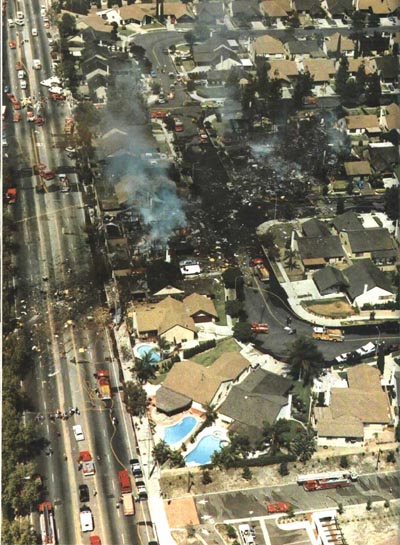
What does a photo of a plane crash have to do with vampires?

Read on.

Someone asked me to write here about the background of "The Haunting of Carrick Hollow," which is one of the stories you can find in the collection of my stories, Eighteen. (Some places list it as 18. Yes, I've learned my lesson about numbers as titles.)

How did I end up writing a story about vampires? Or is it really about vampires? Why did I co-write it? Who is Paul Sledzik? Were there really vampires in New England? What's the forensic science side of the story? The history? How did the story end up in a collection of historical short stories?

The story of the short story is sort of a long story, at least the way I've decided to tell it, which will be over more than one post. This will give those of you who haven't read it yet a chance to look it over (if you want to do) so before I get into spoiler territory. I'll try to avoid that as much as possible, and warn about it, but some elements of "Carrick Hollow" relate to the research and story behind it, so I can't completely separate them.

I thought it might be fun to really trace back the threads that led to the writing of "Carrick Hollow," long before the story itself first appeared in print.

So back we go...let's start with how I met my co-author, Paul Sledzik.

Before my second book was published, I realized I needed to know more about forensic science. Okay, I wanted to know more about it, too. I had enjoyed what I learned researching Goodnight, Irene. But where did a new writer learn such things?

This was long before CSI was on television, and in retrospect, I'm grateful for that, because I didn't learn about forensic science from a television drama. An author friend (and fellow CSULB alumna), Wendy Hornsby , mentioned that she had taken a good class from Larry Ragle at UC Irvine. I saw that the UCI Extension was offering it again, and signed up for it. The class met in the fall of 1992.

Larry was the Director of Forensic Sciences for Orange County, California. (Those of you who like to read about forensic science will enjoy his book Crime Scene.) The class was a perfect introduction to forensic science.

Among the many fascinating speakers he invited into the class was a forensic odontologist who talked about working with Larry Ragle and with Dr. Judy Suchey, a forensic anthropologist then on the faculty of California State University, Fullerton. He included a presentation on the recovery of remains from what was probably Orange County's biggest air disaster -- something most of the locals refer to as the Cerritos plane crash -- after the town where the planes mowed the swath of destruction you see above.

The midair collision of Aeromexico Flight 498 (a DC-9 with 56 passengers and crew of 6 aboard) and a Piper Archer (with a pilot and two passengers aboard) on August 31, 1986, caused the planes to fall into a suburb on the LA/OC border, where it killed 15 people on the ground, wounded 8 others, and destroyed or damaged a dozen houses. (Contrary to popular belief, the pilot of the Piper did not have a heart attack. You can read a full analysis of the crash from the AOPA here.) Identifying the dead was a complex and (given the chemical and other hazards from the crash) dangerous task.

I later learned that Judy Suchey was teaching classes in forensic anthropology for lay people. I found her course equally fascinating. I asked her for information on textbooks and bought a few and did my best to work my way through them. Again, although her course was packed, forensic anthropology really wasn't a hot topic, and wasn't on television dramas yet. In addition to other work as an anthropologist and teacher, Judy Suchey worked on the Charles Manson case, the Hillside Strangler case, and many others in the more than 35 years she has devoted to her field. She is also noted as an author of important studies and a developer of a number techniques in use in the field of anthropology.

Those of you who have read my novels may recall that Larry Ragle had been mentioned in my acknowledgements, and that one of the people to whom Bones is dedicated is Judy Suchey. And a presentation Judy Suchey gave was one of the sparks that led to the short story, "Two Bits." So these courses in the early and mid 1990s had an impact on both my writing and my interest in forensic science.

Later (I believe it was 1995, but I'll have to look up old program books to be sure) I was at a Malice Domestic Convention, and assigned to a panel on research. In the green room before our session, the five panelists gathered for the first time. Soon, two of the other panelists were in close conversation with the moderator. A gentleman I hadn't met sat quietly by himself. I introduced myself to him — he was Paul Sledzik. He told me he was a forensic anthropologist. I asked him if he knew Judy Suchey. He did — and soon we were talking to each other about forensic anthropology, and research, and reading. A friendship began...one I number among those most important to me.


[photographer of Cerritos air crash photo, above, is unknown]

Tuesday, May 08, 2007

If you're anywhere near Brentwood tonight...


meet me at Dutton's! I'll be there for a booksigning by Dick Lochte -- I'm looking forward to reading his latest, Croaked, a comedy-thriller set in Los Angeles in 1965.

I love his writing, and anyone who has read his books can tell you that he is a keen observer with a delightfully wicked sense of humor.

This event is tonight, Tuesday, May 8, 7-9 PM
Dutton's is at 11975 San Vicente Blvd., Los Angeles 90049.


This weekend, on Saturday, I'll be in San Diego at Mysterious Galaxy. You can read about that event below, on the May 1 post.

Saturday, May 05, 2007

Before you shed any tears for Paris Hilton

Remember that the original conviction, for which she did not serve any time, was for driving under the influence.

According to a story in today's Los Angeles Times, at the time of that initial incident:

Within hours of her arrest, she dismissed the incident as "nothing" to radio host Ryan Seacrest, explaining: "I was just really hungry, and I wanted to have an In-N-Out burger.
Guess who kills more people than those who commit homicides by firing guns directly at other human beings?

If you answered drunk drivers, you are right. As a result of drunk drivers' murderous handiwork in just one year, 2004, the families of almost 17,000 people are now grieving for loved ones who lost their lives.

Not exactly "nothing."

The next time you see a friend who has been drinking getting ready to drive, ask yourself if taking his or her keys away would be easier than disarming someone. Because you're definitely letting them use a lethal weapon while their judgement is impaired.

So stop them. Even if they really want an In-and-Out burger.

And talk to someone who has lost a child in a drunk driving accident if you feel the need to cry.

Tuesday, May 01, 2007

Living Wild in Los Angeles County


You've all been patient while I've been working on the Elaine Viets "Tour by Proxy" Project, and I appreciate that. If you are in the San Diego area, I also hope you'll join me, Randy Hicks, and other authors as we do our part to support Elaine on Saturday, May 12, at 10:30 AM at Mysterious Galaxy Books 7051 Clairemont Mesa Blvd., Suite 302 San Diego, CA. And if you can't show up, consider ordering a copy of Murder With Reservations from your own favorite bookstores.

So I am still putting in a lot of time for the project for Elaine and writing and getting ready for the grand opening of the new Los Angeles Regional Crime Lab and all kinds of other stuff. Today I also found time to walk the dogs in our local park. (They usually get night walks.) It was a beautiful day to be outdoors.

For those of you who think the LA area is nothing but concrete and cars -- well, mostly, you're right. But we have our enclaves of wildlife here, too -- both local and imported. And we make celebrities of our wildlife. Yesterday both Reggie the Alligator and the Three Bears of Bradbury made the local evening news.

Reggie isn't a native, but we are an area that enjoys a population with roots from just about any place you could name. Reggie's living in Lake Machado, a place you'll hardly recognize as LA County if you click on that last link. There are those who want us to believe Reggie is blogging and selling his own "official" (puh-leeze!) gear. But the blog is a nice way to keep up with the news on this LA-based gator.

Black bears (even ones that look brown) are native to California. And bears in Bradbury shouldn't be such a big surprise. It's been hot, the people in Bradbury have ponds and pools, and put their trash out today, all of which makes it really attractive if you are foraging in a fur coat. Which should not be unexpected in Bradbury, because it's in the foothills of the San Gabriel Mountains. Which could get me talking about how much wilderness is actually part of the big county of Los Angeles, and that could lead me to talk about why I decided to set Nine there and make the protagonist a member of the LASD.

I won't do that just now, but I feel so much better actually bringing all of this around to talking about books again....


Photo above is clearly neither an alligator nor a California Black Bear. But global warming going unchecked, I fully expect to hear any day now that someone in LA has found a polar bear in his backyard pool. This photo is used courtesy of Monica Mueller, from morguefile.com.

Wednesday, April 25, 2007

What's all this I hear about Elaine Viets?


Elaine Viets

As many of you know, Elaine Viets suffered a stroke just before the release of the newest entry in her "Dead End Job Series" -- Murder With Reservations. Happily, she is on the road to recovery, but she won't be able to tour for the new book. So her friends are "touring" for her— we're asking you to buy her book, either by ordering it from your favorite bookseller, or attending one of the many events her "stand-ins" are hosting for her.

You can find a list of those events here. (Part of the Web site of PJ Nunn, her publicist.)
Check back frequently, as more are being added.

If you wonder why we're troubling to do this, it's because Elaine has given thousands of hours of her time and effort to other writers, both individually and through Sisters in Crime and MWA. She's been generous and kind, and we'd like to return a little of that kindness. And we also think you'll enjoy the book -- it has had great reviews -- and Elaine manages to balance both humor and social consciousness in her books. This time, Helen Hawthorne takes a job as hotel housekeeper -- you'll never feel the same way about staying in a hotel! You can also read a sample chapter on Elaine's Web site.

Saturday, April 21, 2007

How to Help Elaine Viets


As the recent outpouring of messages of concern and well-wishes for Elaine Viets have shown, Elaine has a lot of friends in the mystery community. It's no wonder -- she's not only a delightful person and beloved writer, she has given a lot of time and energy to helping others through her service in MWA, Sisters in Crime, and other groups.

She also has a new book coming out in May, MURDER WITH RESERVATIONS, and one of her biggest worries has been that due to the stroke, she won't be able to tour.

So we're offering her friends a chance to actively help her -- we're going to "tour" for her!

Here's what to do

1) Send an e-mail to 4elaineviets@gmail.com

2) Let us know what part of the country (or world) you are in and if you are

a) an author
b) a bookseller
c) a fan

3) Let us would be willing to:

a) place a stack of Elaine's books on your table as you sign on your own tour

b) help set up an "Elaine Viets" party at your store or a store near you
(if you are not a store owner, PLEASE do NOT contact stores directly at this point!)

c) serve as a "stand-in" by hosting a nearby scheduled signing on Elaine's tour.

d) place an image of Murder With Reservations with a note about this effort on your Web site or blog.

PJ Nunn, Elaine's publicist, is offering to reward the kindness of Elaine's author friends with publicity help for their own books.

We will have more details for you soon!

I know this community is one that has many generous people in it, people who are willing to act on their concern for others. I look forward to hearing from you!


Please feel free to forward this message.


Yours,
Jan Burke

Tuesday, April 17, 2007

Elaine Viets

Those of you who are hooked into the mystery fandom lists and blogs probably know by now that Elaine Viets is hospitalized, after having suffered a stroke. (More on that here.)

Elaine has devoted thousands of hours of her time to other writers through her work with MWA and Sisters in Crime. She's helped to raise money for the St. Louis Humane Society and other animal charities, and she's also a member of the Crime Lab Project — she was one of the first to join.

Elaine has a new book due out in May, Murder With Reservations. It got a starred PW review, and is the latest in her humorous "Dead End Job" series. Some of Elaine's friends are working on a way to help her to "tour" while she recovers — I'm one of those folks. So you may not see me here much for the next few days while I help out with plans!

Saturday, April 14, 2007

Finding an Agent - Authors Tell You Their Own Stories

At the end of March, I posted some suggestions for those who are trying to find an agent — so if you're looking for representation, you may want to read that before you dive into this post.

You may remember that the March post was inspired by someone who believed that you needed an author recommendation to get anywhere in the agent hunt. I disagreed. Whole books have been written on this topic, and I don't intend to replace them with this blog. I only hope these comments from other writers about their experiences will encourage some of you who are looking for agents. Especially if you've been feeling that your chances of getting published are nil just because you
    • never saved an author from drowning,
    • don't hang out in bars with leading literary lights, and
    • haven't located a copy of the Harry Potter book of spells to help you ensorcel a writer by e-mail into being your champion.
Maybe one day the AAR will publish a scientific study whereby agents list their clients who were "discovered" by them — their first-time authors only — and specify how those clients came to work with them. This might provide something more than guesswork on the number of unknown authors who were referred by other clients, were brought to their attention by writing instructors, made the connection through queries, were met through conferences, etc. (To the best of my knowledge, this isn't available now.)

I will readily admit that what I'm posting here is anecdotal. My intention is to show that writers find agents in lots of different ways, and to dispel the myth that the world of publishing is closed and "members only."

Please understand that I am not saying that it is easy to get an agent. Many agents get over a thousand queries a week, and of course they don't take all of those folks on. But here are a few stories from some people who didn't have any special insider help:


From Denise Swanson, national bestselling author of Murder of A Botoxed Blonde and eight other novels:

I found my first agent using a query letter, although I did have the permission of [the late, renowned Mysterious Press editor] Sara Ann Freed to use a quote from the critique she did of my manuscript at the Harriette Austin Writers Conference.

The book I used to come up with the list of agents I eventually queried was the Insider's Guide to Book Editors, Publishers, and Literary Agents by Jeff Herman.


From Meg Chittenden, bestselling author of over 100 short stories and articles, a book on writing, three children's books, and 33 novels that include romance, suspense, mystery, and mainstream — her latest suspense novel is Snap Shot:

Way back in 1971 — would you believe it, I must have been in kindergarten — I received a manila envelope back in the mail — one of my SASE that I was sending out with all the submissions I was making. Disheartened, I let it sit on my desk a while. Luckily I opened it before going to the Pacific Northwest Writers Association Conference. Inside was a contract from Follett for my first children's book. I took it to the conference, talked to an agent who was there, who agreed to represent me (hey, they'd already mentioned money!) and actually got me more money than they had offered. She then repped me through my GH short story days, another children's book and my first novel, which she suggested I write....

[Unfortunately, her first agent died. Meg tells how she found her next agent:]

I wrote to Emilie Jacobson at Curtis Brown, who took me on right away and is still my agent. I wrote her because she was Willo Davis Roberts agent and Willo was doing pretty good, seemed to me. Note that I did not ask Willo to recommend me. I did not tell Emilie I was a friend of Willo.

Because, and this is what I tell people who want me to recommend them to my agent — I believe a writer needs an agent who is enthusiastic about his or her work. I didn't want an agent to take me on because so-and-so asked her to and she maybe felt she owed so-and-so something.


From Toni L.P. Kelner, award-winning author of nine novels, including the forthcoming Without Mercy, as well as numerous short stories:

When I was going to events, trying to figure out how this business works (thinking that I could figure it out), I used to ask writers, "How do you get an agent?"
The usual answer was, "Consult one of the books that list agents and their needs, and query them."
Then I'd say, "Is that how you got your agent?"
And they would almost always say, "No, I knew somebody."

Well, I did NOT know anybody. I actually got my agent via one of those guide books. She was the sixteenth I queried, as a matter of fact, and we didn't meet in person until a few years after we started working together.

So if anybody asks, those guidebooks work!


From Jerrilyn Farmer, award-winning author of seven novels in the Madeline Bean series and short stories, and member of the faculty of the UCLA Extension Writers Program:

The best advice I read was to research which agents rep which authors (by checking the Acknowledgments pages of their books), and to send query letters to agents whose authors are similar in style/genre to yours. In addition, I found the Writers Market and other guides to Literary Agents helpful for their listings of agents who specialize in particular kinds of books. This is how I found my agent.

Sometimes it feels like you need a special introduction to get noticed, but I agree with Meg who said that an agent shouldn't be doing anyone a favor to take you on, but be completely enthusiastic about your books.


From Robin Burcell, Anthony Award winner and author crime fiction novels, including Cold Case:

I went about the whole agent hunting thing backwards.

I sold my first book on my own (a process I do not recommend) and acquired my first agent after being introduced via phone by another writer represented by the same agency. Right around the time I switched genres, my agent left the agency. I sent my first mystery to the same publisher, who was very interested in it.

In the meantime, I was introduced to a second agent at the same agency, who said she was
interested in seeing the mystery. Sent it off to her, then got a call from the publisher saying they wanted to buy it. Second agent negotiated this book. And then my editor said she wanted to buy the second mystery in the series, which she'd read, but needed to wait until
her return from medical leave. During this medical leave, my second agent left the agency, and I took that as my cue to find a new agency myself.

After several queries, I wasn't able to find an agent before my editor returned, and I finally called her, asking if she was still interested in the book, because I was now agentless. She was, asked me what I was looking for, and I gave her my wish list. She gave me a list of agents to query based on that list. I interviewed several while at Bouchercon, then made a decision.

We've been happy ever since.


Paul Guyot brings a slightly different perspective, from the world of television writing — considered by most to be nearly impossible to break into. Shows he has written for include Felicity and Judging Amy.

I found my agent the old fashion way - query letters. I had ZERO connections in Hollywood. None. So I sent a dozen queries out and was rejected or ignored across the board. So then I began to query managers - in Hollywood a manager is someone who acts just like an agent, but isn't accredited. They can get your stuff to maybe 75% of the places an agent can, but 75% of something is better than 100% of nothing. For a complete newbie like myself, managers - especially newer just-starting-out managers - were more willing to read a new writer. Of the approximately four or five queries to managers, only one was interested, so I figured we were a match made in heaven, and I signed with him.

Well, he was able to get my material in front of studio and network executives who put me on their "approved" lists - executives love lists - and from there I was able to very quickly secure an agent, then my first job, and have never been unemployed since. I subsequently fired the manager within my first year of employment. It was perhaps a bit mercenary of me (though there were other issues), but once I had the accredited agent and employment, the manager became superfluous.

I agree with what Stephen King, Elmore Leonard and several other major writers believe - good writing always finds a home. If you write well, you eliminate a huge variable, and thus reduce the importance or need for connections and recommendations. Unfortunately, many aspiring writers (screen and prose) put more effort into getting an agent or getting published than they do the actual writing.


From Sharan Newman, author of the fabulous Catherine LeVendeur historical mystery novels, nonfiction including The Real History Behind the DaVinci Code and (forthcoming in July) The Real History Behind the Templars, as well as short stories and other works:

I published my first three books without an agent, something I don't recommend. I didn't know any other writers. I got mine by going to the Santa Barbara Writers Conference, listening to and talking with the agents there. One of them liked me. That was 1984 and we've been together ever since.

I might also add that, although I have suggested other writers to my agency none of them have been a match.

Sorry, I still think the best way to get an agent is to write a good book, then go to a couple of the conferences or start writing query letters. Knowing another author is not really that useful.


So there are just a few examples of published writers who found agents without recommendations from other writers. My thanks to all of them!


I hope you'll take note of something several of those above have said — having an author recommend you isn't as important as finding an agent who is genuinely enthusiastic about your work. And I strongly agree that your focus must be on creating a work of quality. A recommendation from the hottest author on the NYT list will not help you if your manuscript is weak. If you've written an original and engaging story with a fresh voice, your manuscript will provide what you need most in your quest for an agent.

Friday, April 13, 2007

Abuse of fiction

From the Drug Enforcement Agency's March issue of the Microgram Bulletin:


PAPERBACK NOVEL LACED WITH METHAMPHETAMINE AT THE
WASHINGTON COUNTY JAIL, FAYETTEVILLE, ARKANSAS


The Arkansas State Crime Laboratory (Little Rock) recently received a paperback novel that had apparent yellow highlighter stains on several pages, that field-tested positive for methamphetamine (see Photo 5). The exhibit was seized by the Washington County Sheriff’s Office from an individual who was visiting the Washington County Jail (located in Fayetteville). Analysis of a methanolic extract of the most heavily stained pages by color testing, TLC, and GC/MS confirmed methamphetamine (not quantitated, but a high loading based on TIC). This is the first seizure of this type submitted to the laboratory.


I suppose you should also see the DEA Disclaimers:

1) All material published in either Microgram Bulletin or Microgram Journal is reviewed prior to publication. However, the reliability and accuracy of all published information are the responsibility of the respective contributors, and publication in Microgram Bulletin implies no endorsement by the United States Department of Justice or the Drug Enforcement Administration.

2) Due to the ease of scanning, copying, electronic manipulation, and/or reprinting, only the posted copies of Microgram Bulletin (on www.dea.gov) are absolutely valid. All other copies, whether electronic or hard, are necessarily suspect unless verified against the posted versions.

3) WARNING!: Due to the often lengthy time delays between the actual dates of seizures and their subsequent reporting in Microgram Bulletin, and also because of the often wide variety of seizure types with superficially similar physical attributes, published material cannot be utilized to visually identify controlled substances currently circulating in clandestine markets. The United States Department of Justice and the Drug Enforcement Administration assume no liability for the use or misuse of the information published in Microgram Bulletin.

Wednesday, April 11, 2007

Spring break may be over...


but I'll bet some of you still have these creatures in your house. And apparently, they're nearly as indestructible as these.

Still, I think this is carrying things too far.

And while we're at it, do you suppose they could supply ammo for this? Probably not. But if any of you are aunts and uncles who supply the nephews and nieces with toys that make their parents say, "You shouldn't have!" in a meaningful way, you may want to consider this gift item.

(My niece Timbrely, who still gets weird presents from me, provided a couple of these links. Not the one that caused you to say "Eeeew!")


Photo above courtesy of rosevita, from morguefile.com.

Monday, April 09, 2007

Luck and Timing

Lots of great comments recently. I'm going to take a few days to reply to some of them, but I also want to give my non-writing readers a break here and there from these topics. Which means yes, I've discovered some new weird sites, good ideas, infuriating news, and so on. But I'll quickly tackle a couple of comments.

MF Makichen asked:

...Do you think a lot of the business of writing comes down to luck and timing. Or do you believe that ultimately great writing and perseverance are what will keep a career going long-term.

Just to be clear I admire anyone who can finish a book, find an agent, and get published, whethter the writing is my cup of tea or not. But so much of the "business" of writing seems to come down to luck and in some cases who you know....
MF, thanks for this, because I think a lot of new writers have these questions about luck and timing and connections. So I'm going to respond not just to what you've written here, but on this topic as it concerns new writers.

Luck and timing come into play in all of our lives -- from the moment we are conceived until the day we die. And in some cases, after that. If you are lucky enough to be literate, you are ahead of a great many people on this planet. Trying to understand luck and timing can get us into some questions that are concerned with the workings of the cosmos (and chaos) if not philosophy and theology, which I don't propose to explore here.

So I'll just say that I don't think it makes a lot of sense to magnify whatever amount of luck and timing are involved in a writing career out of proportion. Especially not as an excuse.

I can understand the temptation. If a person is a new writer, and it's a lack of luck or bad timing that causes him not to be published, why then, the universe is against him, and there's not much he can do about that, is there? (This is assuming he wasn't done in by the evil, anti-creative publishing cabal I mentioned a few days ago.) It isn't a matter of anything lacking his imagination or his skill in telling a story, it isn't because he hasn't found his voice, that his style is overly ornate one moment and ridiculously spare the next, that his pacing is all shot to hell, that his grammar is MIA, that every character sounds exactly like every other character, that the opening induces yawns, that the plot is implausible or unoriginal.

Or any of the thousands of other things that can go wrong in a manuscript. No, he just wasn't lucky.

Nonsense.

I've also seen this "luck and timing" stuff used by the envious. I don't know how many times I've heard horror stories from people who were in writing groups and who happened to be the first (if not only) person in the group to be published. Whoooweee. Ever want to see the green-eyed monster of jealousy rear its ugly head, that's where you should set up your cameras. Be sure the sound is on after the newly published person leaves the room: Of course talent had nothing to do with her success. Otherwise, it would have been me and not her! What luck! What timing!

What's the idea here, that publishers are actually using a big lottery system? Superstition is alive and well.

I don't claim that luck and timing are never part of the equation -- they are. I just believe that they don't play anything close to the largest role. And let's face it -- you can't make a career out of luck and timing. If you're going to write more than one book, you need to be able to deliver to your readers again and again. Publishers are looking for someone who shows that kind of promise.

Getting published isn't one, uniform experience. Some people sell a first book without ever getting a rejection. Some people take fifteen or more years to make a sale. Why? I think the reasons must be as varied as the authors and their works, and the people who buy them. And yes, luck and timing play a role, but I don't believe there are publishers making out contracts on nothing more than the basis of the author's luck.

Do I believe that some writers have bad luck? Yes, but I believe one can often recover from it. Do I believe that all talented writers get published? No, but I believe there may be obstacles other than luck involved, so that luck isn't always much of a factor, and to the extent it is, perseverance may increase their odds in the future. I've seen it work.

As for the "whom you know" -- I have asked a few of my friends how they found their agents and editors, and I'll be posting their answers. I hope it will help at least some of you to believe that not everyone had an inside connection.

****

I want to thank my friend John for catching a one of my typos in an earlier post. He's an editor. We all need them. We need friends like John, too.


And finally -- Kathy, so glad to hear from another fan of Thornton's!

Thursday, April 05, 2007

The Economics

New writers usually want to become published authors in part because they feel compelled to write, and if you're going to have a compulsion that strong, why not earn a living at it?

Usually, they also love books and reading, and spend a lot of time in bookstores.

For all that, they seldom know how the book business works. This isn't so odd. I don't really have more than a vague idea of how electricity works, but I use it every day. Still, if I decided I wanted to earn my living as an electrician, I'd study more, and try to apprentice myself to someone who knew what he or she was doing. If I decided I wanted to generate electricity and supply it to others, I'd study a lot, and talk to experienced experts.

So if you're a writer, and you're thinking about being your own publisher, you need to know how your new business works -- not the writing business, but the book business.

Here's a starter lesson on the economics.

The availability of a thing -- including a thing such as book -- does not mean it will be sold.
Simply making a book available (such as by self-publishing) doesn't put it into a store.
Likewise, simply listing it among hundreds of thousands of other books offered at an online store does not sell it and place it in a reader's hands.

But wait! Don't independent stores and even some big stores hand-sell books to their customers?
Yes, but...believe it or not, there is no law requiring booksellers to carry a book just because you think it's pretty darned good! Or even because you're insistent. A shame, isn't it?

Bookselling is not likely to make an independent bookseller rich. Large or small, bookstores are not intended to become literary charities, kissing money goodbye in noble sacrifice just because so many books -- yours, for example! -- are so darned good. They prefer to make at least some profit. The independent's resources are not those of a giant, so they must be careful with those resources.

The space in a bookseller's store is like retail space anywhere — valuable to the merchant. Choosing what goes into that space may (or may not) have more to do with love than it does at a big box store, but at the end of the day, both types of stores must make wise business decisions and believe they can sell what they stock.

And there are other considerations.

For traditionally published books, about 40% of the sales price goes to the bookseller.

The bookseller is also able to return unsold books to the publisher. (A few conditions apply.)

Additionally, the bookseller knows that the traditional publisher is making other efforts to try to help the book to be sold. Sending out copies to reviewers, seeking endorsements, paying for cover art, perhaps creating special displays, advertising, press releases, author tours, and other marketing efforts. In some cases, the publisher may be offering special incentives if the store will host an author appearance.

The bookseller also knows that the publisher is risking money on the book, has invested in this author, and to an extent is staking the publishing house's reputation on the quality of the book. The book was chosen through an editorial process -- an agent brought a likely manuscript to the house, an editor considered it carefully, a committee looked hard at the editor's choice, and decided if the house's resources should be spent -- and in most houses, the manuscript received several kinds of editorial attention before publication.

Now let's look at self-published works. Guess who decided the book should be published? Who did that person have to convince that it was worthy of resources? Guess who will be paying the discount to the bookseller, one way or another? The fact is, as JB Dickey pointed out in the post I mentioned last week, from the Seattle Mystery Bookstore's blog:

In general, POD books are more expensive than regular trade paperbacks from the major publisher. That’s not odd as they’re a different system, scales of economy, etc. But they’re larger, thinner and end up not feeling as if they’re a good value. They also have been available at a lower discount, meaning that the bookseller has to pay more for the book and makes less profit on the sale of the book. (The industry standard is 40%, so out of the 40¢ out of every $1 we make on the sale, we pay the rent, the employees, the various costs of being in business.) It is impossible to stay in business when the discount for a POD is 15% or so. Can’t work. Ties up too much cash flow in stock and doesn’t bring in enough money to pay for the effort. The last thing about PODs is that, since they’re printed to fill the demand/order, they are non-returnable. Normally, unsold books can be returned to the publisher or wholesaler for credit. POD cannot.
Now, some small presses use POD technology and go out of their way to remedy some of these problems and do allow returns, but that's not likely to be the case for a self-published work. This means that it is seldom as profitable to the bookseller to stock self-published works as it is those of legitimate small presses and major publishing houses. I haven't even started talking about what happens when we bring a distributor into the picture.

I'm not saying you'll never see a self-published book in a brick-and-mortar store. But you don't have to be an economics professor to understand the obstacles the author of a self-published book faces in placing a book in stores. A bookseller can't afford to give up much space to books that bring in less than half the profit.

If your dream of being an author included dealing with this kind stuff as the publisher, then it was different than mine.

What you put on the page is — first, last, and always — what will have the strongest influence over your career as a writer. Not many people have so much control over what they do during their working hours. That's where your focus must remain: on the page.

Focus on your craft. Use the power you have over the page wisely. It will take you farther than you may expect.

Wednesday, April 04, 2007

Is there a time for everything, including self-publishing?

Are there times when it makes sense to self-publish?

If what you have in hand is a work of fiction, I'd say the answer is no 99% of the time. You should read yesterday's post for my complete answer about self-publishing a work of fiction.

Still, there are a few cases when I think it might make sense to self-publish non-fiction, with a whole bunch of caveats attached, the first and foremost being that you must understand that this will probably cost you money, should be researched thoroughly (ie, do more than Google "self- publishing"), and is highly unlikely to lead to either fame or fortune. Add to that list: you are sure you haven't written something that could result in a lawsuit.

Self-publishing is a maybe when:

1) You teach seminars and want attendees to purchase your workbooks or self-created texts.
You have an audience, a means of distribution, and probably know what you are getting into.
Keep in mind that in most states, you will need to have a business license, resale permit, etc. and deal with sales taxes and so on. Make sure your self-published materials are completely your own -- you don't want to get hit with violation of copyright, etc. And be sure that you aren't missing out on an opportunity for wider distribution and sales by selling your book to a publishing house.

2) You have made a study of local history that will have limited interest anywhere outside of your community, and there is no small press willing to take it on. Again, be sure interest would be so limited.

3) You are an expert in an obscure field who knows that your subject matter will not be of interest to a university press or textbook publisher, but you believe there is a need and at least a tiny market for your work.

4) You want to reprint, perhaps with a scholarly foreword of your own, a work that is in the public domain and out of print. You are sure there is no other reasonable means to preserve a print edition of this work.

5) You are a war veteran, and want to write about your military experiences. You are creating a memoir that will likely be special to your friends, family, and possibly to other people in your unit, and perhaps even a few military history buffs. You are not working on something that is literature -- not Master and Commander, Catch-22 or All's Quiet on the Western Front. You don't aspire to be W.E.B. Griffin. You just want to tell your own story.

6) You have written a history of your family. You are not a descendant of Thomas Jefferson or anyone else you heard about in grade school.

I think by now, most of you get the picture. You'll notice that this is not on the list: "You are the author of a series that has gone out of print, and you want to make it available to new readers."

That's because I have strong misgivings about whether or not POD self-publishing is a good idea for writers in this situation. I've heard from some writers who were very glad to have the ability to do this, and others who deeply regretted signing on to reprint programs. The downside? Rights can be tied up forever. You may make the book less attractive to potential new publishers. You may not be pleased by the end product, which may not look or feel like a trade paperback from a major house. You have to ask if, aside from any expense to you, this will be worth your time and effort. Will your readers want to fork over $25 for a
trade paperback that may appear to be cheaply printed and bound?

You may want to read what Lee Goldberg has to say about the "big bucks" you can make by going this route. Lee and Keith Snyder have a long history of posting warnings about scammers in the self-publishing industry, and about some of the companies that will swear they aren't vanity presses, but do not at all behave like legitimate publishers. Worthwhile reading before you decide to abandon hope of finding an agent.

After reviewing some of Lee's posts on self-publishing, I find I have an additional item to add to the list above:

7) You are incredibly famous -- and this requires more than a lot of "friends" on myspace. According to Lee Goldberg's blog, in 2005 Jack Klugman self-published a memoir of his years working with Tony Randall, and spent half a million dollars to publish it well. If you haven't had a highly successful acting career that spans several decades, you may not be famous enough to try this.

Next time I'll talk about some of the problems with self-publishing, ones that most new writers do not expect — the difficulties that lead to the low sales numbers — and other pitfalls.

Monday, April 02, 2007

A Few Things to Think About If You Are Thinking About Self-Publishing

Just keep this in mind, and you don't need to read the rest of the post:

Never pay anyone to publish your work of fiction.

Not all that long ago, a person could be self-published in hardcover by what was commonly known as a vanity press, and pay thousands of dollars to insulate a garage with unsold copies of their books. Then in the 1990s, a new technology known as "print on demand" started coming into its own, and suddenly you didn't need thousands of dollars (although some have lost that much to POD self-publishing outfits) and you didn't have to own a garage. Books could be printed and bound one at a time. The technology is used widely and not just for self-publishing, but it has had a greater influence on self-publishing than just about anything since the invention of movable type.

POD technology has also proven to be a fabulous windfall to a set of people who have been in a lucrative industry for decades — not the publishing industry, but the industry of making money off of those who dream of being published. This is a set of people who understand how widespread and tenacious the dream of being able to say "I am an author" is in our society. They know that the impulse to tell stories is strong within many of us. They don't care much about writing or writers. They care about parting dreamers from their money.

I am not completely opposed to self-publishing, but I think there are only a few — a very few — circumstances when an author should go this route. I'll go into some of those at some point, but right now I'm going to focus on the publication of one's first work of fiction. Usually, a new writer of fiction should choose self-publishing only when he or she really doesn't care at all about book sales. I mean that — you don't want to make money and you don't care if you are the only person who owns a copy of your book.

Self-published new authors often dream that their books will light fires of enthusiasm in readers, build huge sales by word of mouth, and start to sell like discounted tickets to the Superbowl. The statistics say otherwise, and I'll get to the reasons they do at some point in this series of posts.

Maybe you really don't care if your book only sells 12 copies. That number isn't one I pulled out of the air. I did a study for a major writers' organization a couple of years ago, and the vast majority of participants in its self-publishing program — a relatively deluxe program that also included experienced, known authors reselling out-of-print titles from their series — sold 12 or fewer copies. (For a number of reasons, the organization dropped the program.)

Publishers Weekly, the major trade magazine for the publishing industry, ran an article in 2005 on iUniverse and included some numbers from 2004 — after the company was well-established — that should give any fiction writer considering self-publishing pause. Of the 18,104 titles — fiction, non-fiction, you name it — published by the company, only 83 sold more than 500 copies. Let me tell you right now that in the world of publishing, setting the bar at 500 copies is setting it low, and only 83 titles jumped over it. Do the math and you can figure out the odds of making that little leap.

I know a handful of people will read these cold hard facts and ignore them. They will want to tell me about someone who got famous by self-publishing. See the sentence about the two-headed calf in yesterday's post. (And for God's sakes, do not give me that old crap about Poe being self-published. He apparently self-medicated, too. Let's not even talk about his marriage to his 13-year-old first cousin. All of that aside, like other industries, publishing has changed since the 1830s, and so has the world of selling books. Even back then, by no means were all of his works self-published.)

So when should you self-publish a first novel?

If you are terminally ill — I am not saying this facetiously — and you all you want is for your family to have copies of your story in trade paperback book form (and simply making a photocopy of a clean manuscript to pass down to your grandchildren won't satisfy you), and you have the money needed to self-publish, by all means do so. The commercial publishing process usually requires at least eighteen months between the signing of a contract and the release a first book. The process before that point, of getting an agent and the agent making a sale, may take even longer. If you don't have that kind of time left, then don't wait for an agent to take you on.

If you aren't dying, you probably don't have a worthwhile excuse for your impatience.

Unless, of course, you have written something that you are certain will never appeal to more than 80 or so readers and has no commercial value, and you have no fear of embarrassing yourself, and you really don't care if you have to hand sell every single copy of your book yourself. If that's the case, go ahead and self-publish.

Here's one of the basic problems. If you self-publish, you aren't just the author. And you aren't just the person who pays to have your manuscript physically made into books. You take the place of everyone in the process of publishing, except those who physically produce the book.

You must either find and pay an experienced editor (assuming you would even know how to recognize someone who could do this extremely important job in publishing — a job that is almost never understood or appreciated by new writers) or become your own editor. The latter case is very unlikely to produce a well-edited book.

You must find or pay a copy-editor. Being your own copy-editor will likely doom your book to being a storehouse of unprofessional if not laughable errors.

You must also be your own advertising, legal, art, sales, publicity, and distribution management departments. To name a few.

All of that takes a tremendous amount of time and energy. Energy that most writers need for a different challenge — to grow as writers.

Where do you want to put your time and energy?

Saturday, March 31, 2007

The Business Side of Writing: the Agent Hunt


I've been talking to Heidi Mack, my Website Manager Extraordinaire, about putting some pdfs full of my take-it-or-leave-it advice for new writers on the sidebar of this blog. If I can get the technical side worked out, I'll create a little library for those of you who come here looking for information about the business side of writing.

I am going to pursue, as mentioned, the topics that the story in yesterday's post bring to mind, and that will be included in the library. However, I got an e-mail today that made me decide to postpone those posts a day or so in order to write about the agent hunt.

I won't repeat the whole e-mail message here or identify the sender, because even though I frankly found a lot of it ludicrous, I believe it was sent with the best of intentions and I don't want to expose the sender to ridicule.

The e-mailer wanted help for a friend who writes. He wants me to introduce the friend to my agent. (Both the e-mailer and his friend are complete strangers to me, by the way.) He is by no means the only person who has written such an e-mail to me. If this is something you've been thinking of doing, please don't.

Within this message, he made a statement that I suspect is believed by a great many people who don't know much about publishing:
As you know, you can only meet with a literary agent if you have a recommendation from another author.
This simply isn't true.

In fact, when I found my first agent, I didn't know any published writers.

There's a trap in the kind of thinking that's often behind statements like those of the e-mailer, a trap that I believe leads more new writers astray than almost any other. It's a trap that passes itself off as a balm for the hurt feelings of the rejected. It says publishing is an insider's game, a cabal of evil greedy bastards who delight in crushing the dreams of the artist before its golden altars of crass commercialism. The aspiring writer is told that only someone anointed by an insider will be allowed to be published.

What utter crap.

If you hear this kind of talk, walk away. Walk away from the embittered and impatient folks who offer supposedly easier paths, who love to strike poses as leaders of the rebellion for the downtrodden and rejected. What's often oppressing these folks isn't the publishing industry -- it's their own sense of entitlement and self-importance.

It's easy to be angry if someone turns you down, and to be lured by this kind of talk into making huge career mistakes.

So what's the deal with finding agents? Do you need a published writer to open the door for you?

Few of the writers I know got the help of published authors when looking for agents. Most writers I've talked to did a lot of homework, queried agents, and persisted like hell. They found someone who took an interest in their work and went on from there.

For the ones who had an author introduction to an agent, I know of no one who e-mailed a request to an author they barely knew (or never met) and got help that way. I'm sure someone out there will now post a comment about someone they heard about who did just that. I could probably find a stuffed two-headed calf in a taxidermy collection somewhere, but that doesn't mean I believe there are barns full of living ones all over the U.S..

So how did the new writers who got help from published authors manage to do that without begging for help from strangers by e-mail?

A few got involved in writers' organizations, got to know published writers well, and got advice from them on agents who might represent that type of manuscript -- although not necessarily a hand-carried introduction to an agent. Others took courses from authors at places like the UCLA Extension's Writers Program, and if they met an instructor who was willing to pass their work on to an agent, found one that way. A few were in writers' groups that included published authors, and got help that way. (I have mixed -- okay, mostly negative -- feelings about writers' groups, but that's for another post.)

So what else can you do if you have a polished manuscript ready to go? (Oh, you're worrying about this without having finished a manuscript? Stop reading now and get back to writing.)

You can also meet agents at the San Diego Writers Conference, the Book Passage Mystery Conference and other major, legitimate writing conferences.

These are important features that lead me to recommend these conferences, and you should look for similar features in other conferences you consider:
  • Well-established (the SDSU was founded in 1984, the Book Passage Conference is in its 14th year)
  • Connected with a reputable institution or organization
  • Offers an opportunity to meet with editors who are from major publishing houses and agents with established client lists
  • Offers an opportunity to have pages of your work read
  • Emphasizes teaching and has nuts-and-bolts workshops

What else should you do to find an agent?

Before you begin the hunt for an agent, you should carefully read the advice here:
Writer Beware
Writer Beware is must reading for all new writers -- and I wish more established writers, especially those who teach writing, would take a look at. If you're a new writer, you should read the pages of this site again and again, until you are sure you have grasped the warnings and advice there. Especially important -- read the Writer Beware List of the 20 Worst Agents.

Look for agents to send queries to here:
Association of Authors Representatives

Remember that there is no licensing requirement or other standard that must be met before a person can refer to himself or herself as an agent, so at the very least, protect yourself to some degree by going with agents who are in this professional organization. It’s important to read the Frequently Asked Questions section of the AAR site.

You can also get agents' names and information from a book available at most public libraries:
Literary Marketplace.

I recommend looking at these blogs:
The Writer Beware Blog

Miss Snark

Jennifer Jackson, especially this recent post.

Why do I recommend them? Writer Beware will help you to see why you don't need an agent, you need the right agent. I think the other two will help you to get a sense of the reality of the worklife of agents, and why some things new writers do to try to become their clients work well and others backfire big time. You'll get information from people in the business about the business. You may find agents who operate quite differently from these two, who disagree with them. But I think you'll learn something from reading their blogs. For example, Jennifer Jackson's statement that she gets 100 queries a week might help you to see why it might take a little time to get a response to your query. Miss Snark explains how it is that even those who meet her at conferences must query. (By the way, she's about to run the crapometer again, so you might take time to figure out what that is and how it may help you.)


I'll talk more about this at some point in the future, but I hope this has given some of you something to think about. I sincerely wish you all the best -- all writers benefit when talented new writers join our ranks. I also wish you the courage you'll need to remain persistent.

Photo above courtesy Mike Conners, from morguefile.com.

Friday, March 30, 2007

Creeps

A friend brought a Publishers Weekly article to my attention, about a scam used to get bookstores to order a title by a POD press.

You should also read this lively entry on the Seattle Mystery Bookstore's blog by JB Dickey.

And don't miss the Writer Beware blog information about the "publisher" in the post, Author Identity Publishing Redux.

I'll soon write more about some of the issues this story raises for new writers.

Monday, March 26, 2007

Goodbye Bloodstains, Hello Biohazards

Ever see the old movie Car Wash? Did my asking that make that Rose Royce song go through your head? For a couple hours? Sorry about that.

I thought of it today when I read a story from the 3/26/07 issue of the Cincinnati Enquirer, "Bloody mess no crime scene."

It tells about the custodian at the Mr. Spotless Car Wash finding a big bunch of blood and bloodstained material near the vacuums. Understandably, he or she called the police.

Turns out a woman drove a friend (who had been injured in a fight) to the hospital, and after driving someone else around, decided to stop by the car wash and clean the blood out her car. I am curious to know how this was figured out, but the article doesn't give details.

The song says "you never know who you'll meet working at the car wash." Apparently you never know what you'll meet, either. Be careful out there!

Friday, March 23, 2007

More About the Tommy Bowman Case

Kenneth Todd Ruiz of the Pasadena Star News wrote several stories that appeared in local papers this week about the new progress in the investigation of Tommy Bowman's disappearance, the case I talked about in a post here yesterday.

"Caltrans documents may lead to bodies" tells of new efforts to search CalTrans archives for information about freeway construction sites where convicted child killer Mack Ray Edwards worked. He was known to bury victims near those freeways. If you click on that link, also take time to watch "Disappearance of Tommy Bowman," a video interview with Weston DeWalt.

Another story,"Author sought closure for family of missing RB boy " gives more background on DeWalt's investigation, which has resulted in new leads in the case. (RB is an abbreviation for Redondo Beach, California, where Tommy's family lived at the time of his disappearance.)

Today, the 50th anniversary of Tommy's disappearance, a story about Tommy's father and family, "After 50 years, father still mourns," was published.

Thursday, March 22, 2007

Half a century later, a cold case may be solved

This story, which I first saw in the Los Angeles Times, is remarkable in a number of ways. It's the chilling cold case story of Mack Ray Edwards, a man who confessed in 1970 to molesting and killing six children in the Los Angeles area. A man who, before hanging himself in his prison cell two years later, said the number of children he molested and murdered was actually eighteen. The 1957 disappearance of a child who may be one of those eighteen -- and cases of several other possible victims -- are receiving new attention.

Also remarkable is how the new attention came about. Weston DeWalt -- perhaps you know him as the co-author of The Climb or from his Salon debate with Jon Krakauer -- is a Pasadena writer who has been researching the disappearance of Tommy Bowman, an 8-year-old boy. Bowman disappeared fifty years ago, during a family outing in Arroyo Seco. DeWalt came across an old newspaper photograph of Edwards under arrest. DeWalt felt he had seen Edwards's face before -- and remembered a sketch in the Pasadena Police Department files on Bowman's case. Later, he uncovered other evidence that points to the possibility that Bowman was murdered by Edwards.

I'll let you follow the link to see more about this, but although you may be drawn to the other aspects of the story, I hope it will also give you a sense of how great and unending an impact a missing person case can have on a family.

As those of you who've read my books or who visit here regularly know, I believe one of the areas where we severely underutilize the promise of forensic science and other investigative processes is in missing persons cases. We don't put enough funding or effort into getting DNA samples loaded into national databases, in helping medical examiners offices to make better use of the Web for John and Jane Doe cases, for staffing of investigative units, or other relatively straightforward steps help solve these cases.

According to the FBI, as of Janurary, 2007, there are nearly 51,000 active cases of missing adults in U.S. -- and 6,218 active cases of unidentified persons. Yet the nonprofit National Center for Missing Adults is severely short of funds. If you do nothing else today, please stop by their site and donate a buck or two or whatever you can afford.

The National Center for Missing and Exploited Children reports on the numbers for children, based on two studies by the Department of Justice:

To date, two such studies have been completed. The first, entitled National Incidence Studies of Missing, Abducted, Runaway, and Thrownaway Children (NISMART-1), was released in 1990; the second, known as NISMART-2, was
released in October 2002. According to NISMART-2, an estimated
• 797,500 children (younger than 18) were reported missing in a one-year period, resulting in an average of 2,185 children reported missing each day;
• 203,900 children were abducted by family members;
• 8,200 children were abducted by persons outside the family; and
• 115 children were the victims of “stereotypical” kidnapping. These crimes involve someone the child does not know, or knows only slightly, who holds the child overnight, transports the child 50 miles or more, kills the child, demands ransom, or intends to keep the child permanently.
Think of missing a loved one for years at a time, without knowing what has become of him or her, and you will just begin to imagine what a hell hundreds of thousands of people in the US alone are living through. Here's hoping investigators in LA County are able to end that hell for a few families.

Monday, March 19, 2007

Feeling better

Thanks to those of you who contacted me here and off-list. I'm feeling much better.

I'm not usually one who talks a whole lot about minor illnesses, having too many friends who've battled major ones to feel that a case of the flu is much to talk about. But I realize that some people make an art form of it, and I've been reflecting on some of the styles of reporting minor illnesses I've observed among friends and others over the years.

The Historian
This is the person who answers your question, "How have you been?", with a recital that starts with "Well, two weeks ago, I think it was Tuesday, I felt a little tickle in my throat. And then on Wednesday, I sneezed three times...." He or she will continue in this vein, building symptoms, recovery, and relapse into a saga worthy of a six-hour mini-series, and it will seem to you that you've already been on the phone about that long.

The Effluence Detailers
These folks feel compelled to describe in great detail the appearance anything that came out of any orifice during the course of their illness. The people who inspired others to coin the phrase "too much information."

The Child Effluence Detailers
These are parents who forget that with the possible exception of a child's grandmothers and one or two mothers at the day care center, absolutely no one wants to hear about the frequency with which things that were in the child ended up on the outside of the child, nor do they want to know about the quantity, color, or rate of acceleration of such effluence. If you think you might be tempted to use this phrase:

It was like something out of The Exorcist...

do not tell the story.

This goes double for pet owners.

The Hypochondriacal Reviewers
These are the people who tell you about all the pangs of anxiety they experienced while contemplating the horrible diseases their flu symptoms might have represented. It doesn't matter that they have known for days that it was the flu -- that's really not the point. No, it's a journey of one freakish self-diagnosis after another. "And then I was really worried, because you know, a fever of 100 degrees is a symptom of [name any deadly disease]." They will congratulate themselves on narrowly escaping a fate that was not within a thousand miles of real likelihood.


I am sure there are others....

Sunday, March 18, 2007

The Hurricane Damaged Libraries

...still need your help. But don't send them books.

Really.

Libraries have to build collections carefully, so imagine what happens if they get nothing but truckloads of old bestsellers, worn paperbacks, and outdated science textbooks. (You wouldn't do that, I'm sure, but the rest of the country isn't always as smart as you are.) Besides, they need to repair buildings and replace shelves, and things like that. So how can you help?

You can read about ways to help the recovery efforts of the New Orleans Public Library here.
You can even order a T-Shirt that will help raise money for the library!

The State Library of Louisiana site asks that people please stop sending books, however financial help for Louisiana's other libraries affected by Katrina and Rita is still needed.

Checks may be made out to:
Louisiana Library Foundation
PO Box 2583
Baton Rouge, LA 70821

For libraries in Mississippi, Friends of Mississippi Libraries, working with the Library Commission and MLA, has established a fund for donations to rebuild those MS libraries severely damaged or destroyed by Hurricane Katrina. Tax-deductible donations can be made by sending your contributions to:

Rebuild Mississippi Libraries Fund
c/o AmSouth Bank
210 E. Capitol Street
Jackson, MS 39201

Thanks in advance for your generosity!

Tuesday, March 13, 2007

FOMA Flu

That's the politest of my several proposed names for the virus that currently has me Flat On My Ass.

I'll spare you the ugly particulars...the only thing worse than having the flu is listening to someone describe their symptoms in whining detail.

Saturday, March 10, 2007

It's Not Just for St. Patrick's Day Any More

If you live in or visit the San Diego area, and want to find some great Irish food, I highly recommend Thornton's Irish Pub & Chop House in El Cajon, California. I was there a few days ago, celebrating my sister Tonya's birthday.

Any gathering of people in my family supplies fine company -- you're on your own for that, sorry I can't help you there. But if you happen to be in the area, I can recommend that you stop by Thornton's. The friendliness of the place, the attentive service, and excellent food make this one worthy of a visit.

Wednesday, March 07, 2007

My least favorite day of the year approaches


It's a sin to go to bed on the same day you get up.
~Jimmy Walker, Mayor of New York City in the 1920s


Although I've long known the quotation in a slightly different form, I've finally found out who said it. By 1920, Daylight Saving Time had only been around for a couple of years, and I wouldn't be surprised if it led to Mr. Walker's proclamation.

If you think it's a bit much to label the "early to bed" behavior a sin, I can only tell you that you must try walking around in the night owls' shoes to realize how amusing it is to see the tables turned.

Night owls are constantly labeled as lazy, just because they don't adhere to the "larks'" schedule. Most night owls try not to disturb the larks' sleep, while forced to try to sleep through the larks' extreme daytime noisiness. Over the years I've heard my lifelong circadian rhythms labeled a "sleep disorder," been told that only people who are up to no good are up at night, had larks who spend far more hours lying about than I do tell me that I'm a slug-a-bed if I don't want to answer the phone at nine in the morning. We night owls are often forced to live with the larks' business hours, or were until the Internet freed a lot of us with its 24/7 convenience.

Some of you who have been in Sisters in Crime for a long time may remember my "Night Owl Manifesto." As I said then, I loathe "spring forward" and love "fall back." So you can imagine how unhappy I am that this year, Daylight Saving Time arrives here in the U.S. a month earlier than usual, on March 11 at 2 AM. Since I'll probably be up when it suddenly becomes 3 AM, it may not be as disorienting for me as for some. But there goes an hour of the lovely night.

I found an interesting discussion and history of Daylight Saving Time on the "Web Exhibits" site. Made me realize how much we take standardized time itself for granted. For many years, the time was whatever the locals agreed it was. (Makes one wonder about those time machines in futuristic fiction that can take a person back to "4:15:01 PM on January 10, 1608." I'll save the calendar discussion for another day.) As the site mentions, "Britain was the the first country to set the time throughout a region to one standard time," and most of the country was on GMT by 1855, although the law establishing it throughout the country didn't pass until 1880.

This desire to standardize time was in response to the demands of the railroads, who also exerted pressure in the U.S., although the first person to try to make a push for it in the U.S. was an amateur astronomer and correspondent of Thomas Jefferson, William Lambert, who brought the idea before Congress in 1809. (I suspect many amateur astromers are night owls, too.) According to the Web Exhibits site:
Standard time in time zones was instituted in the U.S. and Canada by the railroads on November 18, 1883. Prior to that, time of day was a local matter, and most cities and towns used some form of local solar time, maintained by a well-known clock (on a church steeple, for example, or in a jeweler's window). The new standard time system was not immediately embraced by all, however.
Apparently, Daylight Saving Time was an idea of Ben Franklin's that took a couple of centuries to take root. Too soon for my tastes.

All of this probably falls under the category of "more than you really wanted to know," and if so, just take this as a reminder for those of you in the U.S. to set your clocks forward and check the batteries in your smoke detectors this weekend.

For my fellow night owls, let's just keep to ourselves all the finer aspects of the long, quiet hours of the night and of greeting dawn at the end of one's day.

Maybe old Ben meant something entirely different by "early to bed."


The lovely photo of the owl, above, is used courtesy of Bob Wragg, who kindly made it available on Morguefile.com.

Another fun addiction

A friend sent me a link to this site, which will tell you how popular your name or your friends' names were in the U.S. during the last 100 years, provided the name was in the top 1000 names during a given decade. The stats are derived from Social Security records.

Tuesday, March 06, 2007

Calling all Californians

Please take a minute to go over to the CLP Forum and read the post "AB 1079 - A New Crime Lab Bill in California" and then take another minute to use the links on that post to contact your Assembly member in the California legislature.

It's important! Assessing the forensic science needs of the state is the first step in making sound plans.

Feel free to forward this message to every Californian you know.

Friday, March 02, 2007

My fascination with the CMOS Q&A

I've asked myself why I like reading the Chicago Manual of Style's Q&A page so much. The answer isn't that I'm fastidious in matters grammatical. (To phrase it awkwardly.) I never get a manuscript back from a copy editor without realizing that I have caused that person to do a lot of work.

As with my heavily marked-up manuscripts, I do always learn something when a new Q&A is posted on the CMOS's Web site. But that's not the attraction.

Alas, I must admit that what I really enjoy is reading the entries where the "Q" is posted by someone who is high dudgeon over the perceived misuse of some phrase, term, or punctuation mark by his or her colleagues, and in the "A" the questioner is told -- in the politest way, of course -- that he or she is trying to force others to adhere to a rule that doesn't exist.

Kind of a double-reverse schadenfreude on my part, I admit, but there you have it.

Thursday, March 01, 2007

Hmm...


So, as someone asked in Marathon Man, "Is it safe?"

The Schedule is Updated


Think of the above as the way I'm beginning to feel about my to-do list, from the view of the mother bird. One of those weeks, but I did manage to get a note off to super-Webmaven Heidi Mack to let her know about a few additions and changes to my schedule of public appearances. So, if you're wondering if I'll be in your area any time soon, you should take a look at this page of my site.


Photo above used courtesy of Shadetree, from morguefile.com.