Monday, February 26, 2007

The Magical Mystery Tour is waiting to take you away...

Okay, a bus from Vroman's Bookstore with yours truly aboard is waiting to take you to Westwood...hop aboard with me and you'll miss all the traffic and parking hassles at the LA Times Festival of Books!

Here's the deal:

I'm going to be at the Los Angeles Times Festival of Books on April 28th, and I'm getting there and back in a really fun way -- even if I do have to be alert at 8:30 AM!

Vroman's, the fabulous independent bookstore in Pasadena, California (which you should check out online, even if you are nowhere near this state) has kindly invited me to be one of the authors for its 6th Annual Book Bus Ride to the L.A. Times Festival of Books. As their site says:
Join us Saturday, April 28 for a day that begins with a bagel & juice breakfast before our 8:30 a.m. departure, a Vroman's Book Bus hat, a bag full of books & goodies, games and prizes, milk & cookies for the ride home, and a 20% off coupon good April 28 - May 4 at our main store.
Tickets are $45+tax per person, and they sell out every year -- so sign up early to reserve your seat! If you want to be on the bus I'm on, be sure to tell them your preference when you make reservations.

For reservations, please call Vroman's Customer Service at (626) 449-5320.

Friday, February 23, 2007

Back home -- kind of

I'm back from the road, but tomorrow I'll be in San Clemente, California for their sold-out Friends of the San Clemente Library event. You have to love a community that shows that much support for its library!

Saturday, February 17, 2007

On my way to the Alamo

The American Academy of Forensic Sciences meetings are in San Antonio this week, so I'm off to Texas for a few days.

I love these meetings, although due to my obligations for the Crime Lab Project, I participate in them a little differently than I did a few years ago. And because I'm trying to finish a book and have a speaking engagement here in California next weekend, I won't be able to stay for the entire meeting.

But while I can, I'll enjoy the company of some of the most dedicated men and women I have the honor to know. I hope you'll continue to ask your legislatures to give them better funding for their work.

I'll catch up with you here whenever I can!

Thursday, February 15, 2007

Learning Anatomy the Hard Way


This story on a late 18th/early 19th English surgeon who reputedly benefited from a team of grave robbers caught my eye and made me think again of how dangerous it was to study anatomy before anyone had a good notion of germ theory or antibiotics on hand.

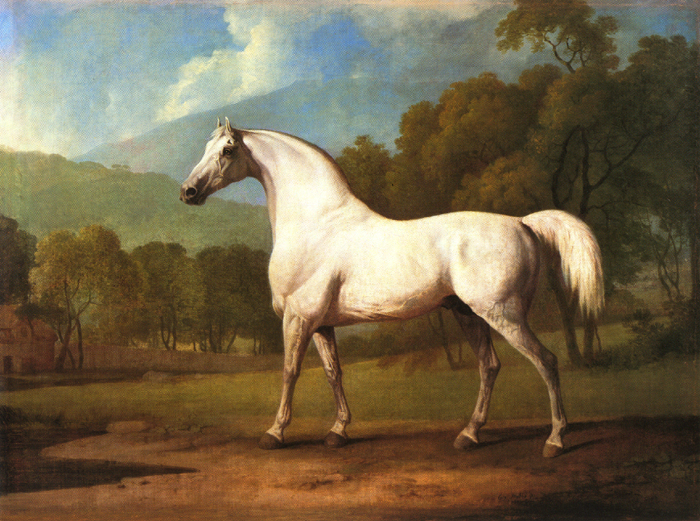
But doctors weren't the only ones risking their health to study anatomy. Veterinarians and artists who made studies of animal anatomy often did so at their peril. If you've read the most recent issue of Bark Magazine, which has several great articles in it, you may have also seen the one about artist George Stubbs (1724-1806), whose paintings (like the one above) of animals broke new ground in part because he was an avid student of human and animal anatomy — he taught at a school of medicine at one point, and published works on anatomy.

If you are anywhere near the Frick in New York, take the opportunity to see a special exhibit of his work. It's only there between now and May 27, and this is its only stop in the U.S..

Wednesday, February 14, 2007

Forensic University

I'm excited about a new event, one that Sisters in Crime is sponsoring. It's a four-day event on forensic science, called Forensic University of St. Louis, "50 Ways to Catch a Killer."

I'll be blogging about it here.

But don't worry -- I'll be back with thoughts on all kinds of things that have come to mind lately.

Right, as if you worried....

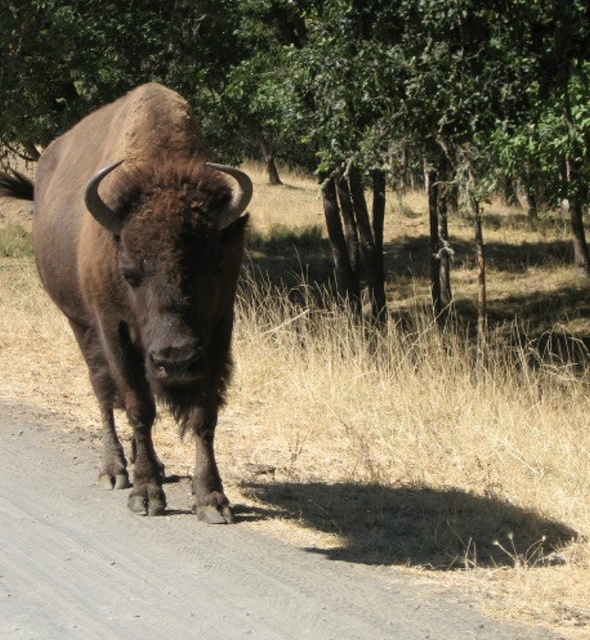
Here's the missing photo from the Buffalo post


This guy is much warmer than the city at the moment.
The photo is used courtesy of dayleemojo, from morguefile.com.

Thursday, February 08, 2007

Off to Buffalo

I probably won't post for a few days -- I'm on my way to Buffalo, New York.
Yes, I know it's February, and what happens there in February.
Don't worry 'bout this Californian.
Writing while snowbound is actually rather wonderful.
At least, it is when you get to decide that you've had enough of snow.


Had another photo I wanted to use here, but when it comes to images, Blogger and I are apparently not working together well these past few days. Keep getting error messages.

[Update: Addded irritation now that I finally have Internet access again -- this post, from Thursday, didn't make it to the blog. So, greetings from JFK airport, and I'll hope to overcome all these blogstacles!!!]

Wednesday, February 07, 2007

Perspective


In 2005, when a television reporter in Madison Wisconsin walked into a Beliot radio station and acted strangely — pulled out a gun, reportedly made threatening comments to a DJ, said something about being an undercover CIA agent — he was arrested. He underwent psychological evaluation, was ultimately found not guilty by reason of "mental disease or defect," and was placed in a treatment plan. I'm glad no one was hurt. I also think it's good that no one got too carried away in analyzing the event, or went too wild blowing it out of proportion.

You may wonder why I bring this up. I want to point out that no one at the time suggested that everyone at the television station he worked for needed re-evaluation, that the station should lose advertising dollars, or that being a television reporter held inherent risks to one's mental health. (Whatever people may think privately about the latter.)

And yet, over the past few days, I've heard comments along these lines following the arrest of a member of the space program.

The trauma of the victim in the case in the news should not be minimized. My heart goes out to her.

I don't know enough about the accused or what happened to want to try a case on my blog. I'll leave that to the justice system. I just want to say that those who are making loosey-goosey statements about how the astronaut's alleged actions reflect on the space program should step back a minute and get some perspective.

Take any profession that has been around for more than an afternoon, and you will very likely find someone in it who has behaved less than rationally. Among those who've endangered the lives of others when perhaps not in their right minds: doctors, Members of Congress, Vice Presidents (I'm thinking Aaron Burr, ladies and gentlemen -- my story and I'm sticking to it), pilots and...you get the picture. You probably get the big picture.

Of course there are concerns that someone who might be suffering a mental illness could endanger lives. (Every day, supposedly perfectly rational people probably cause far more deaths than the mentally ill, but let's not quibble.)

From all I've heard from interviewed psychologists offering opinions about her case from afar, it's unlikely that most screening processes would have identified this woman as having a problem. And unlikely that she would have identified herself in this way. I don't know.

What I do know is that it's a sad story, all the way around.

And one that has nothing to do with the importance of the space program.

Let's not get carried away.

Let's keep reaching for the stars.

[Update on photo: as you can see, the problem seems to be worked out.]


Image credit: NASA, ESA, and The Hubble Heritage Team (STScI/AURA)
"This image from NASA's Hubble Space Telescope shows the diverse collection of galaxies 450 million light-years away in cluster Abell S0740 near the constellation Centaurus."

Another Fun Discovery - Thanks to Timbrely!

Okay, I am going to have to spend lots more time on this site and looking at the T-shirts, but I think I'm already in love with Jessica Hagy's Indexed. Today's "We're All Going to Hell" is just one example of her fascinating ability to say it all on an index card with one graphic.

Take a look at "Sometimes Average is Good."

Or, "There Must Be A Catch."

And if you read the Irene Kelly short story "Call It Macaroni," then you can understand why I like "Nourishing."

Timbrely, thanks again!

Monday, February 05, 2007

On Detectives Not Detecting


I promised Mary-Frances I'd say more about this, so here goes ...

A couple of years ago, I interviewed editors and agents for a column I used to write for a mystery writers publication. Almost all of them said that one of the biggest problems they find in manuscripts by new mystery writers is that the detective does little or no detecting. "Detective" is used here in an informal sense -- the protagonist of the mystery, whether or not he or she is with law enforcement or is a private eye.

Now, to readers, this might seem like a problem that should be obvious to a writer, but it is easy to let it creep up on you when you are the person creating the work word by word, line by line, page by page.

It's especially easy to turn your detective into what I call the Serial Interviewer — the Serial Interviewer is nearly as common in crime fiction as the serial killer, and to my mind, just as deadly when it comes to reader interest. This is a detective who never really solves anything or puts two and two together. Throughout the book, he spends most of his time visiting other characters and talking to them. Bit by bit, they tell him everything. Eventually, someone tells him who committed the murder. Quite often, it's the murderer himself, confessing — holding a gun on the hero, no doubt. He'll be foiled at the last moment, but not before he supplies all the answers for the idiot in his gun sights.

You should try to come up with something a little better than the Serial Interviewer.

By no means am I suggesting that your detective shouldn't question witnesses and others. She can meet intriguing (and possibly guilty) characters, and you can increase tension in the book through these encounters. We can see her act as an observer of persons and their habits.

There's a fine old tradition of this sort of thing in the mystery novel, and some of the best humor in them has come from such encounters. Alas, it often seems as if the people who love the witty observations and repartee of Chandler's Marlowe and Hammett's Continental Op have failed to notice that both characters also solve crimes. They do talk to lots of folks, skewer some, and snap out comebacks -- but they also do some real thinking.

A detective needs to notice things other characters aren't seeing — and at the end of the day, we shouldn't be wondering if all the other characters have missed clues because they are walking while comatose. A detective has to draw conclusions others might reasonably fail to make. He or she should be actively involved in solving the crime -- not passively collecting solutions. Even an armchair detective like Nero Wolfe is more active than passive -- he uses his mind, has the ability to sift through information to arrive at a logical conclusion. Ideally, the reader has also had the opportunity to observe and gather information at the detective's side, but hasn't necessarily recognized the significance of important clues.

(If you're writing a book of suspense or a thriller, some of your tasks may be different than those of writers of detective fiction. That doesn't mean your hero should be passive, though.)

This business of the detecting detective is also one of several reasons why learning about forensic science is a starting point rather than an ending point for writing a mystery novel. Simply having an unusual idea about how someone might be killed or having an idea for a single clue or piece of evidence is nowhere near what you need to write a novel. Among many other obligations to your reader, you have to figure out how the detective will find the key to the meaning of the evidence. You also have to make it clear how the detective arrived at an answer when others didn't.

So look through that manuscript before you send it off, and ask yourself if your detective is carrying the story forward, or simply being swept along on a tide of readily available information. If you work to make the hero more active, you'll increase the possibility of selling your book.

Just my opinion on the matter — in the end, you get to try it your way.


Photo above courtesy of Clarita, who kindly made it available on morguefile.com.

Sunday, February 04, 2007

Back again


Briefly, anyway.

Just returned from LCC 2007. Andi and all the other volunteers (I'm not forgetting you, Stu!) did a fabulous job of running this convention. As usual, I didn't get enough time with all the people I wanted to see. Seattle is a great place to hold a meeting -- lots to see and do and plenty of wonderful eateries, too. I made my usual pilgrimage to Wild Ginger.

The forensic panels went very well -- many thanks to those who came to hear those sessions. I also enjoyed doing the LCC 101 panel with Janet Rudolph of Mystery Readers International.

I now return you to your regularly scheduled Internet -- I'm off to do some laundry!


Above: This lovely photo of Seattle, taken from the Bainbridge Ferry, is used courtesy of Carrie Hosfeldt, who has my thanks for making it available on morguefile.com

Monday, January 29, 2007

I did tell you I was born in Texas, right?


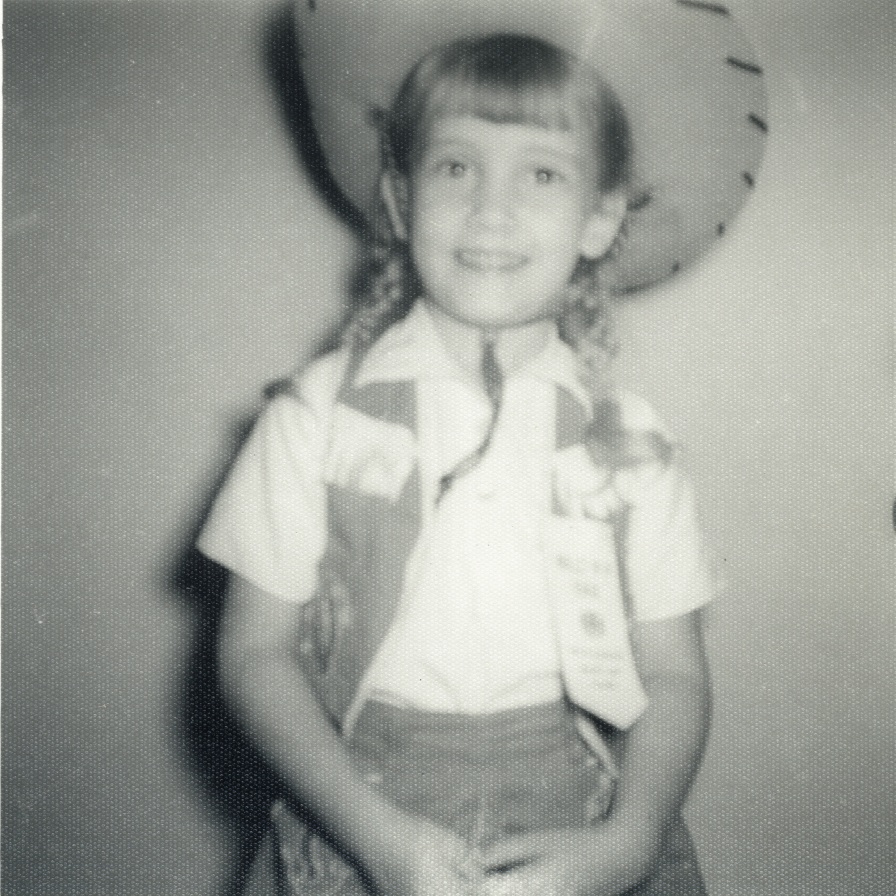
The photo above is one of the reasons why I haven't been here much over the past few days. For a project involving my alma mater, CSULB, I was asked to scan and submit a few photos from childhood to present day.

This, in its turn, required access to the distant part of my garage (a distance measured in density of obstacles, and on that scale, think Everest), an area which might possibly house old photos. Of course, I checked there only after dismantling a couple of storage possibilities within the house. I did find some photos in the house, and I have decided that nothing can slow a person down like finding old photos. Just hard to flip past pictures of fondly remembered people, places, and events.

So, the scaling of Mt. Burke-Garage had a side benefit -- we now have about 20 boxes of books to take to the library, and another pile of to-be-donated goods that will probably go to Goodwill. Oh, and you can now walk from the front to the back of the garage without turning sideways or doing the limbo. Today I broke through to the photo section and found enough useable material to scan and send on to the university.

I'm going to be getting ready for events in Seattle, so you probably won't hear from me unless I get a chance to post from the convention. Hope to see some of you at Left Coast Crime!

Friday, January 26, 2007

Finders Keepers

The easiest way for me to lose a bunch of stuff all at once is to clean the house for company. So I'm still looking for objects lost in December.

But my husband has made sure that I no longer lose my keys or my purse somewhere within my own home. Hunting them down has, on occasion, taken a great deal of time. But now, for all those people who set down groceries, bring the dogs back inside, answer the phone while putting away frozen foods, have to look up something on e-mail for the person on the phone, and then can't the keys a day later....there's this marvy gizmo!

And oh yes, I've used it already!

Monday, January 22, 2007

Barbara Seranella, 1956-2007


I'm so very sad to learn of the death of Barbara Seranella on January 21.

The mystery-writing community is a relatively collegial one. You meet some fine people within it. Barbara was one of the finest.

Her talent as a writer is unquestioned. I met her at an event in Laguna Beach, just after her first book was published. We were in the same general neck of the woods, and our paths kept crossing. Lucky me.

She was such a good person. And a hell of a lot of fun.

She had a smile that could light up a room. If you can't tell that from the photo above, look at this picture and you'll see what I mean. No one ever spent much time around her without realizing that she had a marvelous sense of humor and a quick wit. The last time I saw her, at Bouchercon, she made an auditorium full of people laugh — and accepted an Anthony Award for Best Short Story.

She never tried to fool anyone about who she was or where she had been. She had a kind of rare courage. Walking redemption. I admired her.

But that description doesn't let you know how very kind she was, or a dozen other things you should know about her.

Her life was a story of second chances. She was brave enough to take them and made the most of them. I kept hoping she'd keep getting them, but it wasn't to be.

Our profound loss.


Photo above from an AAUW in Torrance event about five or six years ago. Me, Stephen Cannell, Barbara Seranella, Martin Smith.

Saturday, January 20, 2007

A Backlog Story: Part 2

If you're just tuning in -- you may want to read yesterday's post first.

So the Worthington case brought attention to the Massachusetts State Lab's DNA backlog, which stood at around 1000 cases in 2005.

Now, before I go further in this story, let's take a brief look at the word backlog. Every jurisdiction comes up with its own meaning for this term, and you should be aware of some factors that influence how labs define them.

First, they differentiate between "cases" and "samples." For DNA, a single case can include dozens (or dozens and dozens) of samples to be processed, or very few samples, down to one -- depending on what kind of case it is, how much biological evidence was available, and whether the people collecting the evidence were trained (at all, or well) and if they are feeling encouraged/discouraged about their lab.

Second, labs talk about two types of backlogs: 1) Those for cases -- items to be processed from crime scenes, victims, and those taken from suspects. 2) Those for databases -- the DNA samples taken from anyone required by that state's laws to submit them. That can range from those convicted of specific violent felonies to those convicted of any felony. (Some states, including California, have plans to eventually include felony arrestees, although this will doubtless face some court challenges.) This second group is where DNA "cold hits" come from -- a DNA match in a case when there is no previously known suspect.

Third, in an effort to control backlogs, labs may limit what may be submitted to them. This seems to have been the case in Massachusetts. An Associated Press article by Theo Emery, published across the country in May, 2005 (I saw it in the Houston Chronicle on 5/8/05), said
...The [Massachusetts] state crime lab is so understaffed and underfunded it has to ration how many tests law enforcement agencies may submit...

Each month, the state's 11 district attorneys are allowed to submit only four DNA samples.

"All the DAs are ludicrously handicapped in the number of cases that they can present to the lab," said Geline Williams, executive director of the Massachusetts District Attorneys Association....

Some might say (I would be one) therefore, that this 1000 case backlog was actually artifically lowered. If you are behind on what's submitted, that's one number. If you refuse to allow more than 4 samples from each county into the flow, we're missing the real number -- add in all the cases in those counties that could benefit from DNA analysis and which are not in the chosen 4 samples.

Finally, labs do not have a set criteria for what constitutes a DNA sample that is "backlogged." Some will say 30 days. Others will say 90 days. Or more. There's no universally agreed-upon definition.

But by any of these definitions, Massachusetts law enforcement agencies that use the state lab had been waiting for results in 1000 cases. For each of those cases, someone who should have been held might be committing other crimes. Someone who was trying to investigate the crime had to use more time-consuming (and perhaps less reliable) methods of investigation, victims and their families waited for answers, and in all likelihood, some people who were innocent were under suspicion or denied their freedom.

In 2005, the state DNA lab operations had 12 analysts and their equipment squeezed into an 840-square-foot space. Six to nine months was the standard turnaround for cases submitted to the lab.

The Massachusetts Legislature realized that these were undesirable conditions, and increased the funding of the lab from $6.2 million in fiscal 2005 to $16.2 million in fiscal 2007. They also created a new position in government -- Undersecretary for Forensic Sciences, part of the state's Office of Public Safety. This position was to provide oversight for improvements at the lab and the state medical examiner's office.

Keep in mind that no one gets money the day the Legislature takes a vote. But everyone seems to agree that things started to change for the better. Governor Romney sought additional money to build larger, more modern facilities, and a few months ago -- last August -- a new 12,000-square-foot addition was made to the lab. The lab itself has been in the process of being revamped.

Then on January 12, reports of an announcement from the State Police sent another kind of shock wave through Massachusetts: Robert E. Pino, a civilian administrator, was accused of delaying reports of matches in the state's CODIS system with evidence tested in eleven Massachusetts "cold case" rape cases. These delays meant the cases could not be prosecuted, because while delayed, the Massachusetts 15-year statute of limitations expired. Also, according to the Boston Globe,
...In four cases, Pino prepared reports to police saying that tests linked DNA recovered at crime scenes to suspects, when, in fact, they had not. Pino did not mail all four reports, and no one was arrested because other officials discovered Pino's mistake....
All of this is still under investigation and while Mr. Pino has been suspended, it is important to note that no charges have been filed. Also, the reported problems were not in the actual analysis of DNA. According to a story in the Boston Globe, his union, the Massachusetts Organization of State Engineers and Scientists, has defended him:
The union representing a suspended DNA database administrator at the State Police crime laboratory yesterday blamed any delays or DNA mismatches at the lab on a longstanding problem of understaffing and inadequate funding.
The FBI is currently auditing the lab. The state has started work on its own investigation into what went wrong, and how future problems may be prevented -- one apparent problem: "The administrator alone appeared to control the reporting of DNA test results to police and prosecutors." Other officials have expressed concern that defense attorneys will react with a flood of motions challenging convictions.

If rapists are allowed to be free, if new attacks could have been prevented, if rape victims are denied justice because a lab employee didn't do his job, and if there is no reasonable explanation why he didn't do it (such as an overwhelming workload that one person couldn't reasonably cope with), this is a grave matter and there should be consequences for those responsible. And the lab does need to remedy any problems in its system of oversight that may have allowed such problems to occur.

I don't intend to speculate on Mr. Pino's possible guilt or innocence regarding these allegations. But I do hope that Massachusetts State Senator Jarrett T. Barrios has been misquoted. According to the Globe, he said these developments were especially alarming because of the money recently given to the lab, and added:

"The public has a right to know why their dollars, apparently, have been misspent."
Say what? Misspent? You've had an understaffed lab operating out of a broom closet for a dozen years, a thousand or more cases not even being analysed, and if one man screwed up in the way some claim he has, then all the money has been misspent????

The Massachusetts District Attorneys Association has said the lab has dramatically improved overall in recent years. It would be good to know how many cases have been successfully handled by the lab, how much matters have improved. Because I imagine if you talk to the victims and families of victims of those crimes, no one will feel that the money invested in the lab has been misspent.

I think the Senator owes the other workers in the lab an apology.

Friday, January 19, 2007

A Backlog Story: Part 1

Despite what you see on TV, most crime labs are under-funded. You've probably received that message if you've been reading here for a while.

Labs aren't just a little bit short of change when it comes to buying new gadgets. A great many of this country's forensic scientists are working in tiny, inadequate spaces and using outdated equipment and technologies. Their labs can't properly store or track evidence and are having trouble paying enough to their staffs to retain them. The labs are trying to cope with overwhelming backlogs -- untested evidence piles up quickly, rates of solving crimes slow.

Why does this happen? Those who make decisions about spending tax dollars on law enforcement and criminal justice usually don't make labs a priority. There are a variety of reasons for this, some understandable, others god-awful, but the only thing that seems to make a difference in priorities is public pressure. Unfortunately, the problems of labs are a reality that most people don't seem to grasp. (This is exactly why the Crime Lab Project got underway.)

Sometimes, one case makes a difference to a lab, can help the public to see the reality.

The January 6, 2002 high profile murder of fashion writer Christa Worthington in her Cape Cod home was such a case. Although there was DNA evidence at the scene, the case went unsolved. You can see from this 2003 story by CBS that theories abounded -- as did books and stories that "fictionalized" the facts and further scandalized -- but law enforcement hoped for help from DNA:
District attorney Michael O'Keefe says recently revealed DNA evidence shows that within hours of her death, Christa Worthington had sex [with] - for now, a mystery man.

"It's DNA of an unknown male that's consistent with someone having had sexual relations with the victim," says O'Keefe. "And it's that DNA that we seek to match."
Frustrated for three years, in 2005 investigators even tried collecting -- on a voluntary (and controversial) basis -- DNA swabs from local men to look for a match. Part of the controversy stemmed from the fact that the lab was already backlogged. Before any of the hundreds of volunteered samples were tested, the match came through a sample collected in March 2004, in an earlier effort to eliminate suspects. The match was to Christopher M. McCowen, who has since been convicted of the murder.

When the public realized that the sample of McCowen's DNA had been sitting untested in the state lab for almost a year before the crime was solved, a hue and cry went up that was heard across the country. The price of backlogs had been brought home: a violent criminal had been left free -- and free to possibly commit other crimes; the innocent were forced to live under a cloud of suspicion; the family, friends, and community of the victim were left without answers.

There was little mystery about the cause of the delay. The under-funded crime lab didn't have the resources to process all the evidence submitted to it. The legislature declared it was a shame (without always owning up to the fact that it was a shame partly of their own making) and an outrage and they would have no more of it -- they voted millions more dollars to the state lab.

But as events proved last week, the lab's troubles weren't over.

Thursday, January 18, 2007

She Probably Has the Time to Do the Time

If you've read the post about outdoing the Grinch, you may remember Jessica Hardy, convicted of forgery and taking funds from the Make-A-Wish chapter in her part of Pennsylvania. It was quite a scheme -- she invented children, faked doctors' reports on them, and raised money on their "behalf." Then bought SuperBowl tickets, took her family to Disney World, and bought a bunch of other stuff.

Yesterday the judge in the case decided that her crimes and lack of remorse deserved three to six years in prison. For more details, read the WNEP story by Sarah Buynovsky and Andy Palumbo here.

It's not just a matter of someone being greedy in an especially reprehensible way, of course. Co-workers lost their jobs. The local chapter was closed down. Donations to Make-A-Wish were down all across the country as a result of her actions. In three years she could be out, but its probably already too late for some of the real kids who would have been granted wishes with the money she spent on herself.

Wednesday, January 17, 2007

Walking the walk


Yes, still working....but while I write and try to get materials ready for LCC and all kinds of things you probably don't want to be bothered reading about, check out this cool site from Google Maps -- an online pedometer.

What you can do with this is chart out a route for a walk or a run and be able to see the distance of each leg of your travel.

Tim let me know about this one. I believe his secret plan worked -- I see we'll need to go back to one of the longer routes for our walks.

Photo above courtesy of bamagirl, from morguefile.com.

Monday, January 15, 2007

Yep, I'm on a weird news kick

(Dusty, that "Yep" is for you.)

Since Britches is 0-2 in his battle against striped wildlife, if we go up to Canada to help this poor skunk get back home, we'll probably leave Britches and Cappy on this side of the border.

I'm getting some writing done these days, so the story of Britches v Polecats will have to wait.

Friday, January 12, 2007

Dang, too late to tell them about it now

Before I started working as a writer of crime fiction, I probably would have had a harder time naming friends of mine who would eagerly ask me where they could buy these.

I found the link on Mondo Chicago. Alana Waters, who took the photo, also made some beautiful cards that benefit Hurricane Katrina relief. And oh yes, it's still needed.